
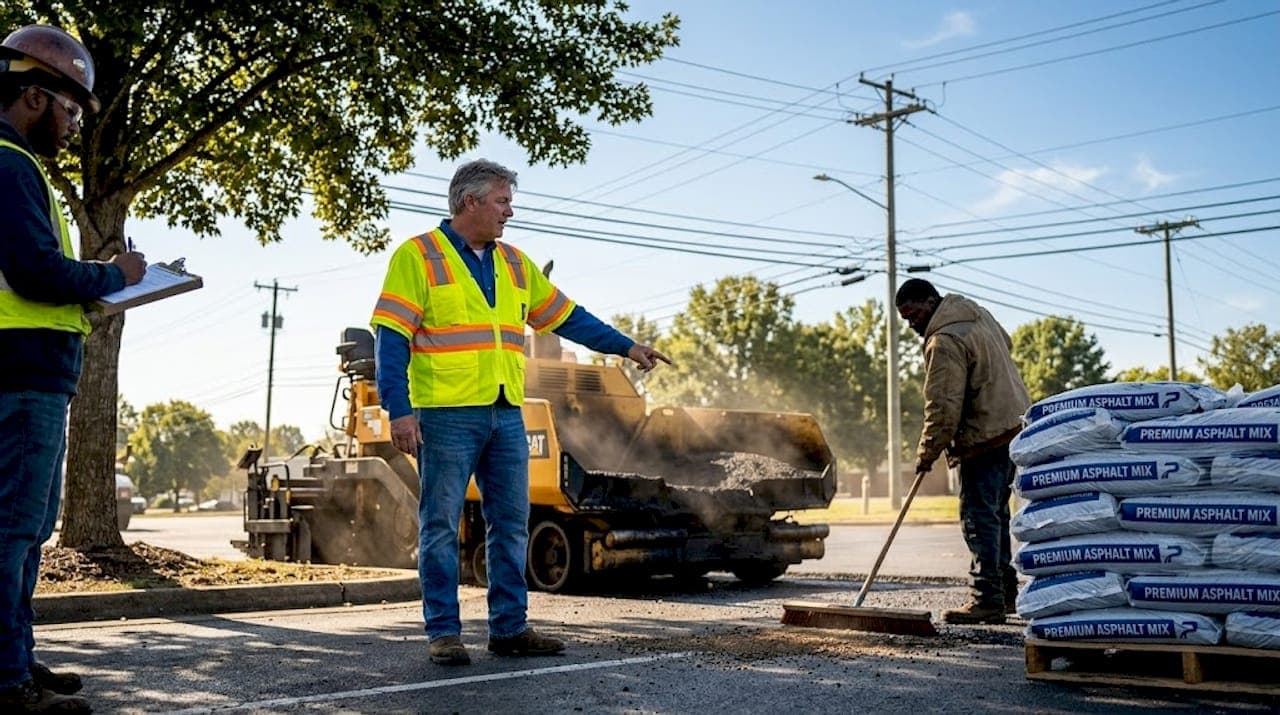
Cracked, faded asphalt doesn't just look bad. It signals neglect to tenants, customers, and buyers before they ever reach your front door. Understanding the asphalt paving process helps you move past guesswork when hiring contractors, budgeting for repairs, or deciding whether a pothole needs a patch or a full replacement. For Tennessee property owners dealing with freeze-thaw cycles in winter and intense heat in summer, that knowledge isn't optional. It's what separates a pavement that lasts 20 years from one that starts failing in five.
Table of Contents
- Understanding asphalt paving basics and preparation
- Step-by-step asphalt paving execution process
- Asphalt repair and maintenance essentials for long-lasting pavement
- How to evaluate when to repair or replace asphalt pavements
- Why quality compaction is the unsung hero in asphalt paving success
- Professional asphalt paving and repair services in Tennessee
- Frequently asked questions
Key Takeaways
| Point | Details |
|---|---|
| Proper preparation | Thorough site grading, debris removal, and base compaction are essential foundations for durable asphalt pavement. |
| Hot mix asphalt temperature | Heating asphalt mix to 300-350°F keeps it workable for effective compaction and bonding. |
| Compaction quality | Achieving 92-96% density via timely rolling and testing prevents water damage and rutting. |
| Effective repairs | Potholes and damage need clean cuts, tack coats, layered filling, and sealing to last. |
| Repair vs replacement | Large-scale cracking and structural distress typically require full pavement replacement for long-term value. |
Understanding asphalt paving basics and preparation
Every successful paving job starts well below the surface. The visible black layer gets all the attention, but what happens underneath it determines whether that pavement lasts a decade or two.
Hot Mix Asphalt, commonly called HMA, is the standard material used in professional paving. It's a blend of aggregates (crushed stone, sand, and gravel) bound together with liquid asphalt cement. To stay workable during placement, HMA is heated to 300–350°F and compacted to 92–98% density. Drop below that temperature window and you lose the ability to compact properly. Exceed it and the binder begins to degrade.
Knowing the basic asphalt terminology helps you evaluate what a contractor is actually proposing. Three structural layers define every pavement system:
- Subgrade: The native soil beneath everything. It must be graded, cleared of organic material, and compacted to at least 95% Proctor density (a standard measure of how tightly soil particles are packed).
- Base layer: Crushed stone, typically 4 to 8 inches thick for commercial applications. It distributes load and provides drainage.
- Asphalt surface: One or more lifts (poured layers) of HMA, each compacted before the next is applied.
| Layer | Material | Typical thickness | Primary function |
|---|---|---|---|
| Subgrade | Native or imported soil | Varies | Load support and drainage |
| Base course | Crushed aggregate | 4–8 inches | Load distribution |
| Binder course | Coarse HMA | 2–4 inches | Structural support |
| Surface course | Fine HMA | 1.5–2 inches | Ride quality and protection |
Tennessee's climate adds specific demands. The temperature swings between Memphis summers (over 95°F) and East Tennessee mountain winters require the right asphalt mix to handle both thermal expansion and contraction. A binder grade suited for moderate climates may soften and rut on a hot Nashville parking lot. Your contractor should reference state specs, outlined in the Tennessee pavement standards guide, when specifying mix design.
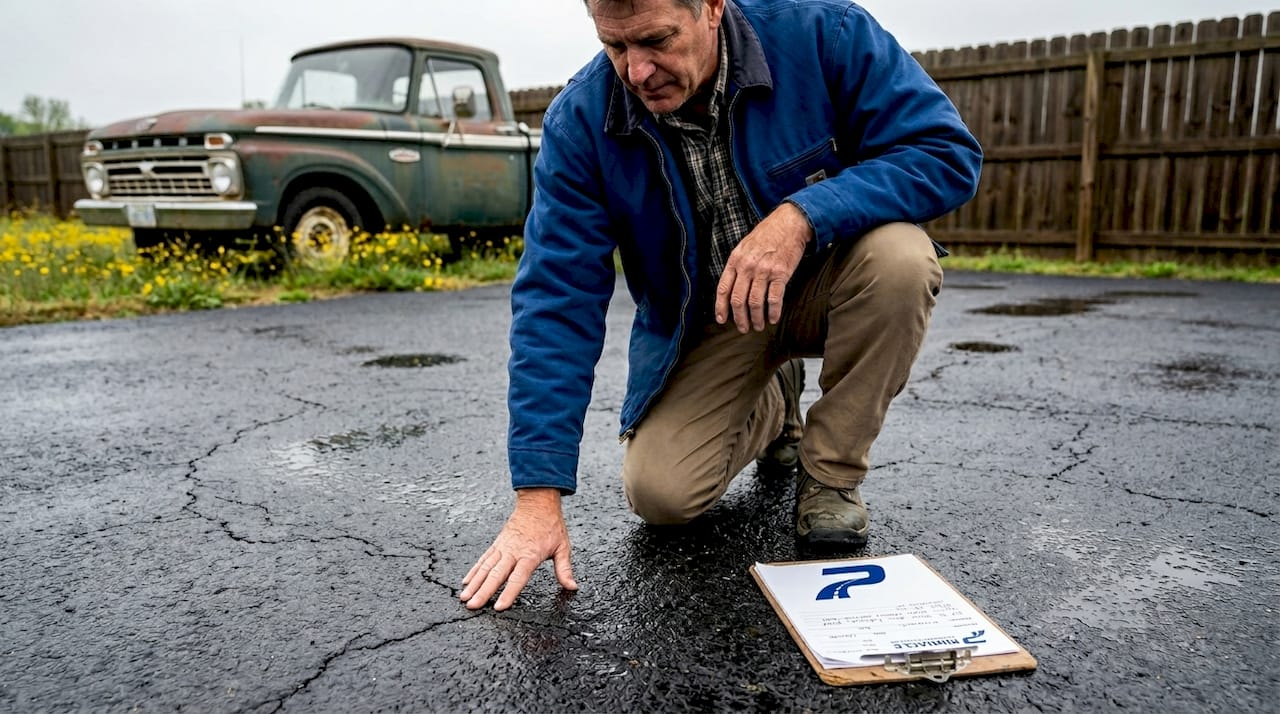
Pro Tip: Ask any paving contractor to show you compaction test results from a recent comparable job. If they can't produce field density data, that's a meaningful red flag.
Step-by-step asphalt paving execution process
With preparation complete, the paving process moves into the precise application and compaction of asphalt layers. This phase is where timing and equipment matter more than most property owners realize.
Here's how a professional crew executes the full-depth asphalt paving process from start to finish:
- Final grade check: Before any asphalt is placed, crews verify slope and drainage using laser or GPS equipment. Even a quarter-inch variation can create standing water that accelerates deterioration.
- Tack coat application: A thin layer of emulsified asphalt (called tack coat) is sprayed onto the prepared base. It acts as a bonding agent between layers. Skipping this step is a common shortcut that causes delamination later.
- HMA delivery and transfer: Trucks deliver mix at 275–325°F. Material Transfer Vehicles (MTVs) are often used on large commercial jobs to remix the asphalt and maintain uniform temperature, which prevents the cold joints that cause early cracking.
- Paver placement: A self-propelled paver spreads the HMA in a continuous mat. Modern pavers use GPS-controlled screeds to maintain consistent thickness and grade across wide areas.
- Breakdown rolling: The first and most critical pass happens immediately after placement. A heavy steel drum roller (typically 10–12 tons) compacts the mat before it cools. This pass must begin within 10 to 12 minutes of placement.
- Intermediate rolling: A rubber-tired roller follows, pressing aggregates into place and closing any surface voids left by the breakdown pass.
- Finish rolling: A lighter static steel roller smooths the surface and removes any roller marks from earlier passes.
- Cooling and opening: Most asphalt can handle foot traffic within a few hours, but vehicle traffic should wait until the surface cools to at least 185°F, typically several hours after final rolling.
Crews compact freshly spread mix to 92–96% density within minutes of placement, which is why the entire operation has to run like clockwork. A truck that arrives late or a roller operator who stops for 15 minutes can compromise an entire section.
| Roller type | Weight | Timing | Purpose |
|---|---|---|---|
| Breakdown (steel drum) | 10–12 tons | Immediately after paving | Initial densification |
| Intermediate (rubber-tired) | 8–10 tons | After breakdown pass | Aggregate seating |
| Finish (static drum) | 6–8 tons | Final pass | Surface smoothing |
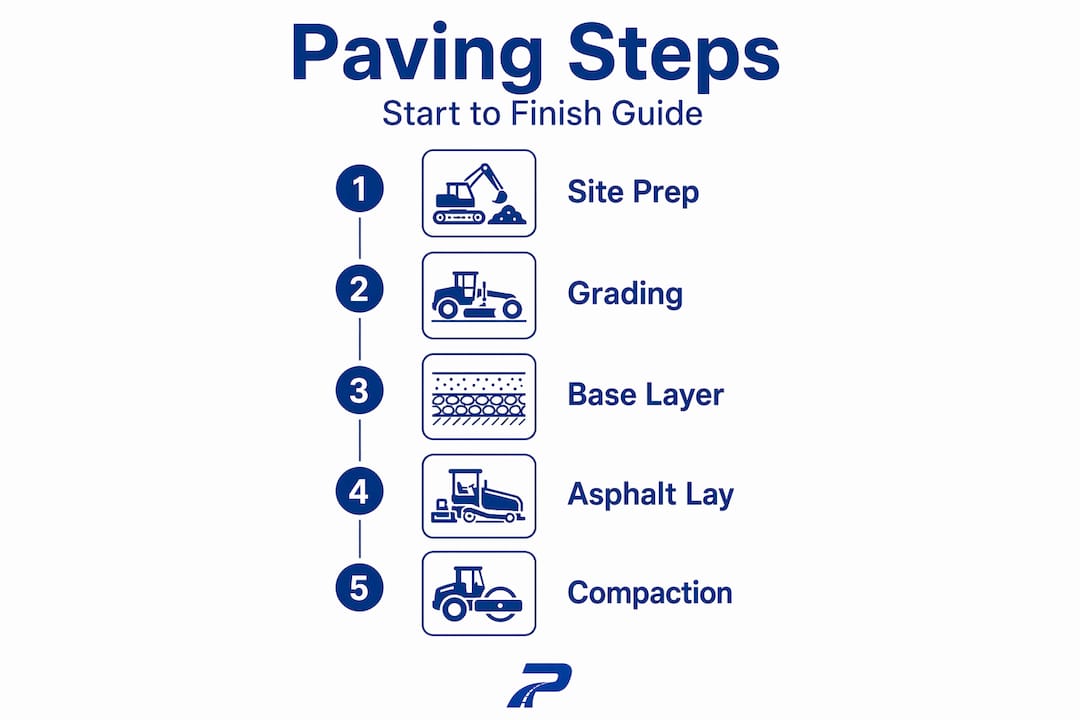
Layer thickness also varies by use. A residential driveway might need just 2 to 3 inches total. A commercial parking lot sees 3 to 4 inches. A truck route or distribution facility driveway may require 5 to 6 inches across multiple lifts. Review your project scope with a contractor who offers professional asphalt services and can specify thickness based on your actual traffic load.
Pro Tip: If you're managing a commercial property, ask whether the contractor uses GPS-controlled paving equipment. It dramatically improves grade consistency on large lots where minor slope variations cause drainage headaches for years.
Asphalt repair and maintenance essentials for long-lasting pavement
Maintaining pavement quality requires skilled repair and preventive maintenance after the initial paving is done. Even a well-constructed surface will develop isolated damage over time, especially in Tennessee where thermal cycling stresses the surface every season.
The asphalt patching process follows a clear workflow, and shortcuts at any step lead to patches that fail within one or two seasons:
- Clean the repair area: Remove all loose debris, standing water, and vegetation. A pressure washer or industrial blower works well here. Any contamination left in the hole prevents the new material from bonding.
- Cut clean edges: Saw-cut or mill the perimeter of the damaged area to create vertical, square edges. Tapered or crumbled edges are the number one cause of patch failure. The new asphalt has nothing solid to bond to along a ragged edge.
- Apply tack coat: Brush or spray a thin tack coat on the vertical edges and the base of the repair. This step is often skipped on budget jobs and it shows quickly.
- Fill and compact in lifts: Place asphalt in 2-inch layers and compact each one before adding the next. Effective pothole repairs require clean edges, tack coat, layered compaction, and sealed perimeters to block water infiltration. Dumping all the material in at once and rolling it down creates a patch that's dense at the top and loose at the bottom.
- Seal the perimeter: Apply a crack sealant or joint sealer around the patch edges after compaction. Water entering the bond line is what causes patches to pop out during freeze-thaw cycles.
Beyond expert asphalt repairs, routine maintenance extends pavement life significantly:
- Sealcoating every 3 to 5 years protects against UV oxidation, fuel spills, and water penetration. Fresh sealcoat also restores appearance, which matters for commercial properties where parking lot condition affects customer perception.
- Crack sealing should happen as soon as cracks reach about a quarter inch wide. Waiting allows water to reach the base layer, which turns a $500 crack seal job into a $5,000 base repair.
- Annual inspection of drainage patterns, surface texture, and edge conditions catches problems early. Knowing whether to sealcoat or resurface is a decision that depends heavily on what you find during that inspection.
How to evaluate when to repair or replace asphalt pavements
Knowing when to repair or replace guides smart maintenance investments for your asphalt surfaces. This decision affects both your immediate budget and your long-term costs, so it deserves more than a gut feeling.
Here's what to look for when evaluating pavement condition:
- Alligator cracking (interconnected cracks resembling reptile scales) signals base failure, not surface failure. Patching over it is temporary at best. Water has already compromised the structure below.
- Deep ruts or depressions indicate subgrade settlement or inadequate original thickness. Surface repairs won't address what's happening underneath.
- Widespread surface cracking across more than 30 to 40 percent of a pavement area is generally past the threshold for cost-effective repair.
- Localized potholes and edge cracking with an otherwise intact surface are good candidates for the asphalt patching workflow described above.
- Pavement age matters too. Most asphalt surfaces have a design life of 20 to 30 years with maintenance. A 25-year-old lot showing widespread distress is a replacement candidate. The same damage on a 10-year-old lot with good drainage might just need targeted repair.
Large-scale cracking and structural distress across wide areas usually require full replacement rather than spot repair to hold up long-term.
| Condition | Recommended action | Relative cost |
|---|---|---|
| Isolated cracks (under 1/4 inch) | Crack sealing | Low |
| Potholes with clean base | Patching | Low to medium |
| 20–30% surface deterioration | Resurfacing or mill and overlay | Medium |
| Alligator cracking, base failure | Full reconstruction | High |
| Pavement over 25 years old | Replacement evaluation | High |
The economics matter here too. Repeated patching on a failing pavement often costs more over three years than a full replacement would have upfront. Choosing durable asphalt solutions from the beginning reduces how often you face this decision. And reviewing your repair versus replacement options with a qualified contractor before committing saves money.
Why quality compaction is the unsung hero in asphalt paving success
Understanding when to repair or replace is vital, but ensuring proper compaction during paving is where lasting quality truly begins. After 15 years of watching pavements succeed and fail, the single most common cause of premature failure isn't bad materials or harsh weather. It's under-compaction that nobody caught on the day the asphalt went down.
Property owners tend to judge paving quality by how smooth and black the surface looks when the crew drives away. That's a mistake. A mat can look perfect and still be compacted to only 88% of the required density, which means it has excess air voids. Those voids let water in. Water expands when it freezes. And that smooth-looking surface cracks from the inside out before the second winter ends.
Compaction quality depends on start timing and field density tests, not on visual inspection alone. The roller operator has to begin the breakdown pass at the right temperature window. Too hot and the mix displaces instead of compacting. Too cold and the aggregates lock up before they reach target density. It's a narrow window that requires experience and active monitoring.
Achieving 92–96% density directly determines how well the pavement resists water damage and rutting over its lifetime. That's not a range that looks different to the naked eye. It's validated with a nuclear density gauge or core sample, and it should be documented in writing.
When you hire a paving contractor, ask specifically whether they perform field density testing and whether that data becomes part of your project record. Quality contractors build this into their standard process. Contractors cutting corners skip it entirely, because it's the step that would reveal the problem. Reviewing pavement compaction standards for Tennessee before you sign a contract gives you the baseline knowledge to ask the right questions. Your pavement's 20-year performance gets decided in that first hour after the asphalt hits the ground.
Professional asphalt paving and repair services in Tennessee
You now know what a properly executed asphalt paving process looks like, from subgrade preparation through final compaction. The next step is working with a contractor who actually delivers it.

Pinnacle Pavement Solutions serves commercial property owners, property managers, and residential clients across Tennessee with full-service asphalt paving and repair built on the standards covered in this article. We use professional-grade paving equipment, perform documented compaction testing, and back every project with transparent pricing before work begins. Whether your property needs new full-depth paving, targeted pothole repair, or sealcoating to protect what you already have, we match the right solution to your actual pavement condition. Visit Pinnacle Pavement Solutions to request a site assessment and get a written quote with no pressure and no guesswork.
Frequently asked questions
What temperature is hot mix asphalt heated to during paving?
HMA is heated to 300–350°F during production to keep it workable for placement and compaction. Falling outside that range compromises the ability to achieve target density.
How important is asphalt compaction in the paving process?
Compaction is where long-term durability is won or lost. Density targets of 92–96% of lab maximum density are what separate pavement that lasts 20 years from pavement that cracks and ruts within three.
When should I choose to repair versus replace my asphalt driveway?
Repair works well for isolated potholes, edge cracks, and surface-level damage on pavement with an intact base. Widespread cracking and structural distress across large areas are signs that full replacement is the more cost-effective long-term choice.
What steps are involved in professional pothole repairs?
Professional pothole repairs start with removing debris and cutting clean vertical edges, then applying tack coat, filling in 2-inch compacted layers, and sealing the patch perimeter to prevent water from undermining the repair.