
When asphalt starts showing its age, the instinct for many property managers is to assume the whole surface needs to be torn up and replaced. That assumption costs Tennessee property owners thousands of dollars they never needed to spend. The reality is that a well-timed, consistent sealcoating program can more than double the functional life of your pavement, keeping your parking lot or commercial driveway looking sharp and performing well without the budget shock of a full resurfacing project. This article walks you through exactly how to tell the difference, what each option costs, and how to make the right call for your specific property.
Table of Contents
- Understanding sealcoating and resurfacing
- Comparing costs and outcomes
- Tennessee climate: Crucial timing for pavement care
- How to decide for your property: A step-by-step guide
- Expert perspective: What most property owners miss about pavement maintenance
- Connect with Tennessee's pavement maintenance experts
- Frequently asked questions
Key Takeaways
| Point | Details |
|---|---|
| Sealcoating frequency matters | Applying sealcoat every 2-3 years can double pavement longevity with regular maintenance. |
| Resurfacing is a last resort | Reserve resurfacing for severe damage; maintain with sealcoating to delay major expenses. |
| Climate impacts timing | Schedule maintenance during late spring through early fall for best results in Tennessee. |
| Maintenance saves money | Proactive sealcoating is more cost-effective over time compared to infrequent big repairs. |
Understanding sealcoating and resurfacing
These two treatments are not interchangeable, and treating them as if they are leads to either overspending or underprotecting your asphalt. Understanding what each one actually does is the foundation of any smart pavement maintenance plan.
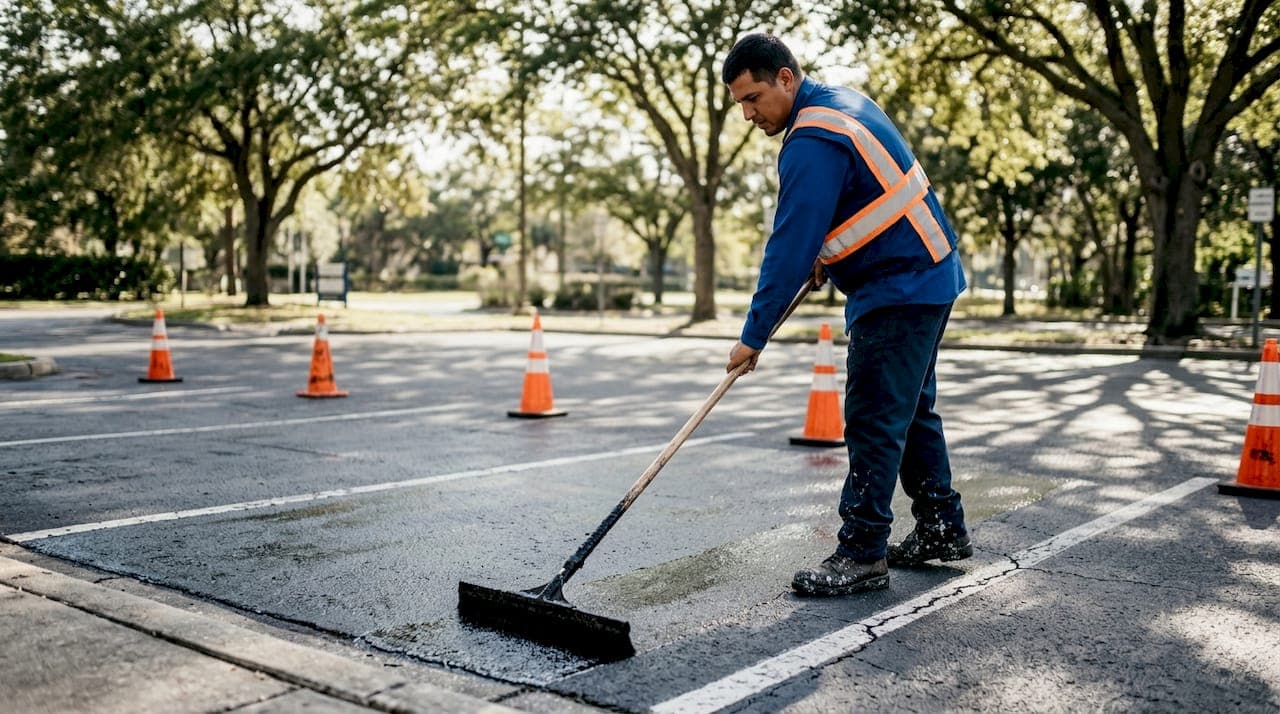
Sealcoating is the application of a thin, coal-tar or asphalt-emulsion based protective layer over existing asphalt. Think of it like sunscreen for your parking lot. It does not add structural thickness or repair deep cracks. What it does is block UV rays, repel water and fuel spills, and slow the oxidation that makes asphalt turn gray and brittle. The surface you sealcoat today will look noticeably darker and newer within hours of curing.
Resurfacing, sometimes called an overlay, involves milling down or paving over the existing asphalt with a fresh layer of hot-mix asphalt, typically 1.5 to 2 inches thick. It addresses moderate structural problems, corrects drainage issues, and gives the surface a true reset. It is not the same as full-depth reclamation, which tears out everything down to the base. Resurfacing assumes the base layer is still structurally sound.
Here is how the two approaches compare at a glance:
- Sealcoating is preventive maintenance, applied every 2 to 3 years
- Resurfacing is corrective treatment, typically needed every 15 to 25 years
- Sealcoating costs a fraction of resurfacing but must be done consistently
- Resurfacing can address rutting, large cracks, and drainage problems
- Both treatments work best when the pavement base is in good condition
Consistent maintenance through sealcoating services is what separates a 15-year pavement life from a 30-year one. According to industry data, sealcoating every 2 to 3 years extends pavement life by 5 to 10 years per application, with total pavement life reaching 20 to 30 years when maintenance is kept up consistently.
"Sealcoating is not a luxury add-on. It is the single most cost-effective maintenance tool available for asphalt surfaces, and skipping it is one of the most expensive mistakes a property manager can make."
The two methods complement each other over the pavement lifecycle. A new asphalt surface gets its first sealcoat 12 to 18 months after installation, then follows a regular sealcoating schedule for years. When the surface eventually develops moderate cracking or surface fatigue, a resurfacing overlay resets the clock, and the sealcoating schedule starts again. You can explore the full range of asphalt services that support this lifecycle approach.
Comparing costs and outcomes
Money is always part of the conversation, and this is where the sealcoating argument gets very compelling very fast.
| Factor | Sealcoating | Resurfacing |
|---|---|---|
| Typical cost per sq. ft. | $0.15 to $0.25 | $2.00 to $5.00 |
| Frequency | Every 2 to 3 years | Every 15 to 25 years |
| Downtime | 24 to 48 hours | 2 to 5 days |
| Addresses structural damage | No | Yes |
| Extends pavement life | 5 to 10 years per application | Resets surface life |
| Best for | Prevention and protection | Moderate to severe surface wear |
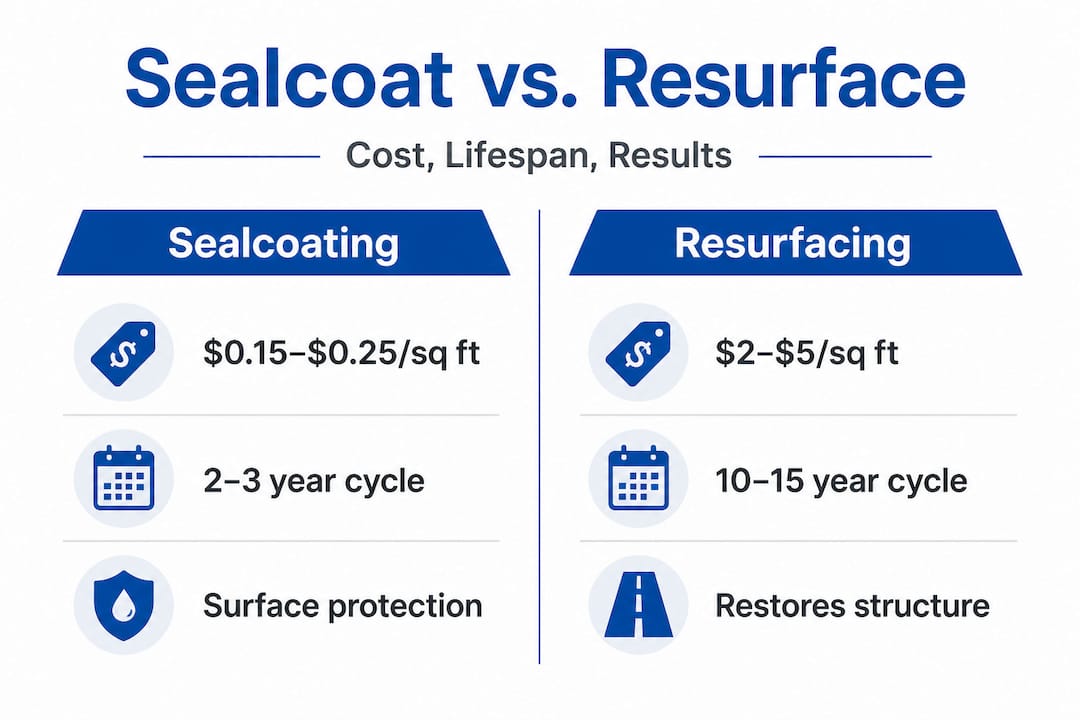
The numbers above tell a clear story. If you manage a 50,000 square foot parking lot, a sealcoating application might cost between $7,500 and $12,500. A resurfacing project on that same lot could run $100,000 to $250,000 depending on prep work, drainage corrections, and material costs. Even if you sealcoat every two years for 20 years, you are still spending far less than one resurfacing project, and you are likely avoiding the need for that resurfacing altogether.
Here is a realistic lifecycle investment breakdown for a mid-size commercial property:
- Year 0: New asphalt installation
- Year 1 to 2: First sealcoat application
- Year 4: Second sealcoat application
- Year 6 to 7: Third sealcoat, minor crack filling
- Year 9: Fourth sealcoat application
- Year 12: Fifth sealcoat, moderate crack repair
- Year 15 to 20: Evaluate for resurfacing if surface fatigue is significant
- Year 20 to 25: Resurfacing overlay if needed, then restart sealcoat cycle
Following Tennessee sealcoating guidelines and sticking to this kind of schedule, pavement life of 20 to 30 years is achievable compared to the 12 to 15 years you might get without any maintenance.
Pro Tip: If your property skipped sealcoating for five or more years, do not assume resurfacing is the only option. A thorough crack fill and sealcoat can still add meaningful life to the pavement if the base is intact. Get a professional assessment before committing to the larger expense.
When does resurfacing become unavoidable? When you see alligator cracking (a pattern of interconnected cracks that looks like reptile skin), deep rutting more than an inch below grade, or areas where the asphalt has completely separated from the base. At that point, sealcoating is like painting over rust. It covers the problem without solving it.
Tennessee climate: Crucial timing for pavement care
Tennessee sits in a climate zone that is genuinely hard on asphalt. You get intense summer UV radiation, high humidity, occasional heavy rainfall, and winter freeze-thaw cycles that can crack even well-maintained surfaces. Understanding how these forces work helps you time your maintenance for maximum effectiveness.
The freeze-thaw cycle is particularly damaging. Water seeps into small cracks, freezes overnight, expands, and then thaws the next day. Each cycle widens the crack a little more. Over a winter season, what started as a hairline crack can become a pothole. Sealcoating blocks water from entering those micro-cracks in the first place, which is why timing your application before winter is so valuable.
Here is a seasonal overview of Tennessee conditions and their impact on pavement:
| Season | Conditions | Pavement Impact | Maintenance Window |
|---|---|---|---|
| Spring (March to May) | Warming temps, rain | Freeze damage becomes visible | Ideal for sealcoating after April 15 |
| Summer (June to August) | High UV, heat, humidity | Oxidation and softening | Good window with proper curing time |
| Fall (September to October) | Cooling temps, dry spells | Surface prep is excellent | Last reliable window before winter |
| Winter (November to February) | Freeze-thaw, moisture | Active cracking and heaving | Avoid all sealcoating applications |
Tennessee's UV and freeze-thaw conditions accelerate wear significantly, and best results come from sealing in late spring through early fall when temperatures stay between 60 and 90 degrees Fahrenheit. Below 50 degrees, sealcoat emulsions do not cure properly and can peel or fail within months.
The regional climate guidance for Tennessee also accounts for the fact that East Tennessee and Middle Tennessee can experience noticeably different weather patterns. Nashville and Memphis tend to have milder winters than Knoxville and Chattanooga, which see more freeze-thaw cycles annually. Properties in the eastern part of the state should prioritize getting their sealcoat down before October.
Pro Tip: Aim for your sealcoating window between late April and early October in Tennessee. This gives the emulsion the temperature and dry time it needs to bond properly. Scheduling in late September gives you a buffer before the first cold snap.
UV damage is the other major factor that most property managers underestimate. Asphalt binder, the material that holds aggregate together, oxidizes under prolonged sun exposure. This is why unsealed asphalt turns from black to gray over time. That gray color is not just cosmetic. It signals that the binder is drying out and the surface is becoming brittle. Optimal sealcoating conditions take both UV protection and temperature into account to ensure the coating bonds and cures correctly.
How to decide for your property: A step-by-step guide
You now have the background knowledge. Here is how to translate it into a concrete decision for your specific property.
Step 1: Do a visual assessment. Walk the entire surface and note what you see. Use this checklist:
- Gray or faded color throughout the surface (sign of oxidation, sealcoat candidate)
- Hairline or minor surface cracks less than a quarter inch wide (sealcoat with crack filler)
- Moderate cracking with some depth, no base movement (evaluate for resurfacing)
- Alligator cracking or areas that flex underfoot (resurfacing or base repair required)
- Potholes or depressions more than one inch deep (resurfacing or full repair)
- Pooling water or drainage problems (resurfacing with grade correction)
Step 2: Check the pavement age and maintenance history. A 5-year-old surface that has never been sealcoated may look worse than a 12-year-old surface that has been maintained. Age alone does not determine what treatment is needed.
Step 3: Assess your budget cycle. Sealcoating fits into an annual or biannual maintenance budget. Resurfacing is a capital expenditure. If your fiscal year does not support a major project this cycle, a well-done sealcoat and crack fill can buy you another 2 to 3 years while you plan the larger investment.
Step 4: Consider your tenant and customer traffic. High-traffic properties, like retail centers or distribution facilities, experience faster wear. These properties benefit most from staying on a strict sealcoating schedule because the cost of downtime during a resurfacing project is significant.
Step 5: Consult a professional before committing. If you are unsure whether the base is sound, a pavement professional can assess it quickly. Spending money on a resurfacing overlay over a failing base is money wasted. See real-world examples of commercial pavement work in the project gallery to understand what well-maintained and properly restored surfaces look like.
Pro Tip: Consistent sealcoating is the best insurance against emergency repairs. A parking lot that cracks severely during a harsh Tennessee winter can become a liability issue overnight. Staying on schedule means you almost never face that situation.
Following a consistent maintenance plan with sealcoating every 2 to 3 years extends pavement life by 5 to 10 years per cycle. Over a 30-year period, that is a dramatic difference in total cost of ownership.
Expert perspective: What most property owners miss about pavement maintenance
Here is something we see constantly in Tennessee: property managers who have let sealcoating slide for years, watched their asphalt deteriorate, and then concluded that resurfacing is the only path forward. Sometimes they are right. But often, they have spent three to five times more than they needed to because they treated sealcoating as optional.
The misconception runs deep. Resurfacing feels like a real investment because it is visible, expensive, and dramatic. Sealcoating feels like a minor expense, almost cosmetic. That perception is backwards. The data is clear that long-term sealcoating strategies are what drive the most value per dollar spent on pavement over its entire life.
What we have learned working with commercial properties across Tennessee is that the property managers who come out ahead financially are not the ones who spend the most on asphalt. They are the ones who spend consistently and on schedule. A $10,000 sealcoating investment every two to three years is almost always cheaper than a $150,000 resurfacing project that could have been delayed by a decade with proper maintenance.
There is also a liability angle that rarely gets discussed. A deteriorating parking lot with cracks, potholes, and uneven surfaces is a trip-and-fall risk. Insurance claims and legal exposure from pavement-related injuries are real costs that do not show up in a maintenance budget comparison but absolutely affect total cost of ownership.
The most expensive pavement decision is the one you delay.
Connect with Tennessee's pavement maintenance experts
Understanding the difference between sealcoating and resurfacing is one thing. Executing the right plan at the right time for your specific property is where the real value is created.
Pinnacle Pavement Solutions works with commercial property managers, franchise operators, and facility owners across Tennessee to build maintenance schedules that protect pavement investment and avoid costly surprises. Whether you need local sealcoating experts to assess your current surface condition, asphalt repair solutions for existing damage, or a full property evaluation from Tennessee's pavement professionals, we bring the equipment, the expertise, and the honest assessment your property deserves. Contact us to schedule a site visit and get a clear, no-pressure recommendation for your pavement.
Frequently asked questions
How often should I sealcoat asphalt in Tennessee?
Tennessee's weather conditions make every 2 to 3 years the right sealcoating interval, as UV exposure and freeze-thaw cycles accelerate surface wear faster than in milder climates.
When is resurfacing necessary instead of sealcoating?
Resurfacing is the right call when asphalt shows alligator cracking, deep structural damage, or base movement that a surface coating cannot address or stabilize.
Can sealcoating help prevent damage from Tennessee's freeze-thaw cycles?
Yes, sealcoating seals micro-cracks and repels moisture before it can freeze and expand, and Tennessee's freeze-thaw conditions make this protective function especially important for commercial properties.
What's the ideal temperature for sealcoating asphalt?
Late spring to early fall, when temperatures consistently stay between 60 and 90 degrees Fahrenheit, gives sealcoat emulsions the conditions they need to cure and bond properly to the asphalt surface.