

Pavement repair is one of those terms that gets thrown around loosely, but most property owners discover its real meaning only after something goes wrong. What is pavement repair, exactly? It is a broad category of treatments designed to restore damaged asphalt or concrete surfaces to safe, functional condition. It covers everything from filling a single pothole to milling down an entire parking lot and laying fresh asphalt. Understanding the difference between these options before you need them saves you money, prevents liability, and keeps your property looking sharp year round.
Table of Contents
- Key takeaways
- What is pavement repair and why it matters
- How to recognize damage that needs repair
- Popular repair techniques and how they work
- Costs, lifespan, and strategies that protect your investment
- My take on choosing the right repair approach
- Get expert pavement repair from Pinnaclepave
- FAQ
Key takeaways
| Point | Details |
|---|---|
| Repair goes beyond patching | Pavement repair includes crack sealing, resurfacing, patching, and reconditioning, not just filling holes. |
| Early action cuts costs | Catching damage early means cheaper surface fixes instead of expensive structural reconstruction. |
| Method must match damage | Choosing the wrong repair type wastes money; surface treatments cannot fix base failures. |
| Weather affects repair quality | Cold or wet conditions reduce bonding strength, making timing a critical factor in repair success. |
| Sealcoating extends pavement life | Regular sealcoating extends asphalt life by 3 to 5 years when paired with crack sealing. |
What is pavement repair and why it matters
At its core, pavement repair means restoring a deteriorated surface so it performs safely and looks presentable. Asphalt patching targets localized damage like potholes, cracks, and worn spots without replacing the entire surface. But pavement repair is not a single action. It is a spectrum of treatments, each suited to a specific type or severity of damage.
Getting comfortable with pavement repair terminology helps you have smarter conversations with contractors and make better decisions about your property. Here are the terms you will encounter most often.
- Crack sealing: Hot or cold rubberized material injected into cracks to block water from penetrating the base
- Pothole patching: Filling a collapsed area with new asphalt material, ranging from temporary cold-mix to permanent hot-mix
- Skin patching: Laying a thin asphalt layer over a deteriorated surface area without removing the old material
- Mill and overlay: Grinding off the top 2 to 4 inches of existing asphalt and repaving with fresh material
- Chip seal: Applying a liquid asphalt binder followed by aggregate chips to protect and strengthen the surface
- Fog seal: A light spray of diluted asphalt emulsion used to slow oxidation and surface raveling
- Sealcoating: A protective coating applied over sound asphalt to shield it from UV rays, water, and fuel spills
The distinction between surface repairs and structural repairs is where a lot of property owners get tripped up. Sealcoating and crack sealing protect the surface but do nothing to fix a failing base. If your asphalt is showing alligator cracking or sinking, you need a structural fix, not a cosmetic one.
| Repair type | Best for | Lifespan added |
|---|---|---|
| Crack sealing | Early-stage cracks | 3 to 5 years |
| Pothole patching | Localized failures | 2 to 7 years |
| Mill and overlay | Surface-wide wear | 7 to 10 years |
| Chip seal | Rural roads, low traffic | 5 to 7 years |
| Sealcoating | Preventative protection | 3 to 5 years |
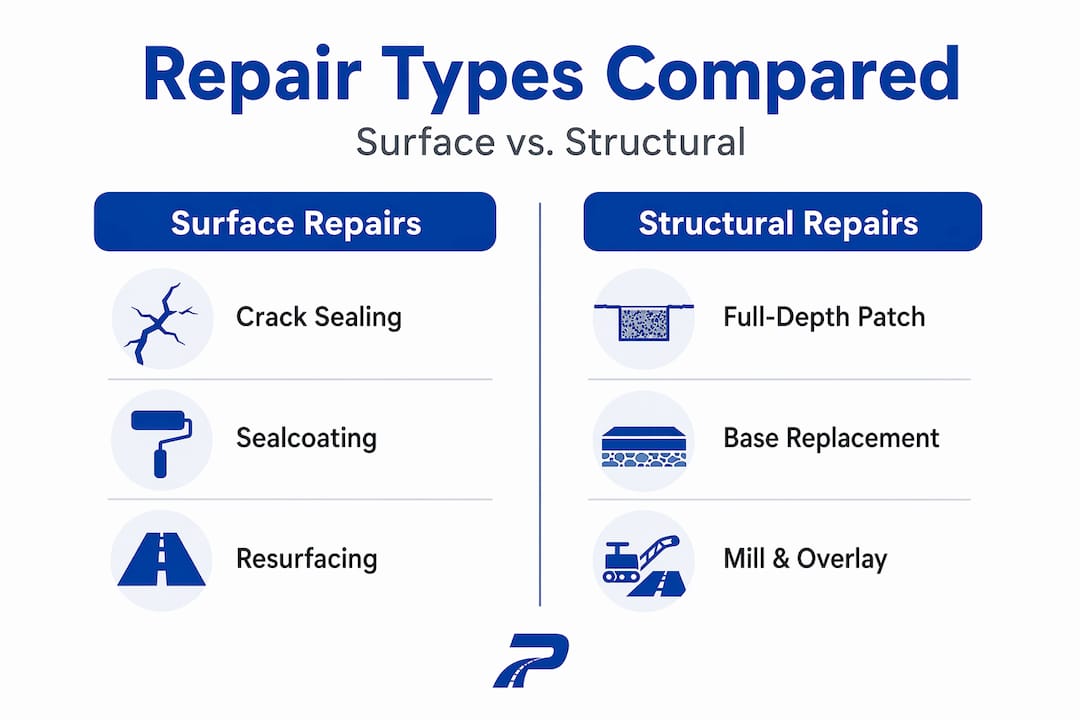
Pro Tip: If you are unsure whether your damage is structural or surface-level, check for cracking patterns. Alligator cracking (a web of interconnected cracks) signals base failure. Linear or transverse cracks are surface issues you can address with sealing.
How to recognize damage that needs repair
Most pavement problems start small and quiet. A hairline crack along an expansion joint. A slightly rough texture near a drain. Left alone, these become the potholes and crumbled edges that create real safety hazards and invite complaints.
Potholes form when water infiltrates cracks, freezes, and expands, weakening the pavement from underneath. Traffic then does the rest, collapsing the weakened section into a hole. In Tennessee, where temperatures swing significantly between seasons, this freeze-thaw cycle accelerates damage faster than many property owners realize.
Common damage types to look for include:
- Surface cracks: Hairline to quarter-inch cracks running in lines or grids
- Potholes: Open holes caused by base failure and traffic load
- Raveling: Surface aggregate loosening and breaking away, leaving a rough, pitted texture
- Alligator cracking: Interconnected cracking resembling reptile scales, indicating base failure
- Edge cracking: Breaks along the pavement edge from lack of support or drainage issues
- Rutting: Depressions in wheel paths caused by heavy loads or soft base material
The causes behind these problems are just as important to understand as the damage itself. Poor drainage, substandard installation, tree root intrusion, heavy vehicle loads, and simple oxidation over time all contribute to surface breakdown. Understanding pavement maintenance terminology helps you pinpoint whether your surface needs a quick fix or a deeper solution.
Pro Tip: Walk your parking lot or driveway quarterly. Bring a piece of chalk and mark any new cracks you spot. Reviewing those marks six months later shows you exactly how fast damage is progressing, which tells a contractor how urgent the repair is.
Popular repair techniques and how they work
Knowing how each repair method is performed gives you a realistic sense of what to expect in terms of cost, disruption, and longevity. Not every contractor performs every method, and not every method is right for every surface.
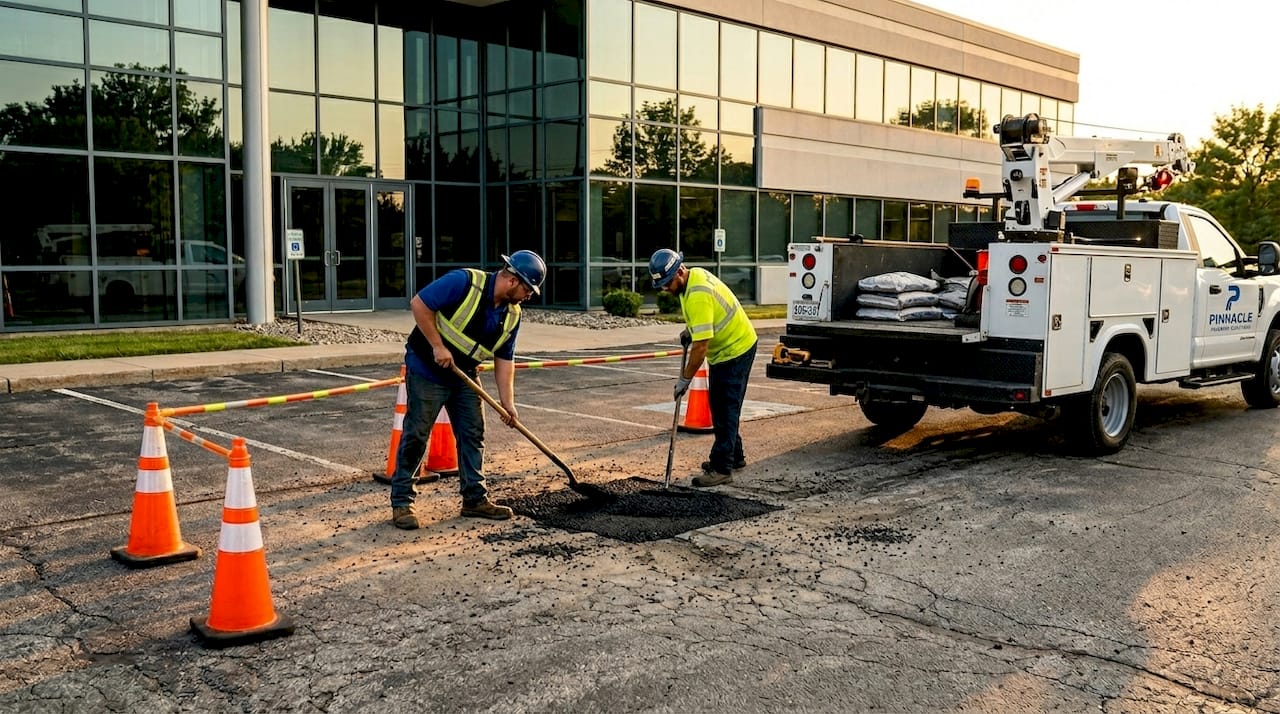
Pothole repair runs the range from quick to permanent. A throw-and-go repair drops cold-mix asphalt into the hole and compacts it lightly. It is fast and cheap, but it rarely lasts more than a season. Semi-permanent patching involves cutting square edges around the hole, cleaning out debris, filling with hot-mix, and compacting it properly. This version lasts several years. Mastic repair uses a hot-applied rubberized compound that bonds tightly to the surrounding asphalt, making it excellent for high-traffic areas.
Crack sealing is the most underrated repair in pavement maintenance. Done early, it stops water from ever reaching the base. Done late, it slows the spread of existing damage. Either way, it costs a fraction of what a mill and overlay will run you.
Here is a step-by-step breakdown of how a professional mill and overlay is performed:
- The surface is evaluated for base integrity (no point resurfacing over a failing base)
- A milling machine grinds off the top 2 to 4 inches of existing asphalt
- The milled surface is cleaned and swept thoroughly
- A tack coat (bonding agent) is applied to the existing base
- Hot-mix asphalt is laid by a paver and compacted with a roller
- The surface is allowed to cure before traffic is reopened
Mill and overlay extends pavement life 7 to 10 years when the base is still structurally sound. It is the most common major repair for commercial parking lots in Tennessee because it restores appearance and function without a full reconstruction cost.
Chip seal works differently. Rather than adding a thick asphalt layer, it sprays liquid binder and embeds aggregate chips into the surface. This treatment adds skid resistance and slows deterioration at a lower price point than overlay. It works well for low-to-medium traffic areas and rural driveways.
Temperature matters more than most property owners realize. Cold weather prevents asphalt from bonding properly, causing premature failure. Certain hot-applied materials like mastic require surface temperatures to support adhesion. Scheduling repairs in spring or early fall in Tennessee gives you the best conditions for lasting results. If a contractor is willing to work in cold rain without any comment about conditions, that is a red flag worth noting.
Pro Tip: Ask your contractor what mix temperature they are using for hot-mix asphalt. Anything below 275°F at the point of application is a warning sign for poor compaction and early cracking.
Costs, lifespan, and strategies that protect your investment
Pavement repair costs vary widely based on method, square footage, and damage severity. Here is a practical range to use for initial budgeting:
- Crack sealing: $0.50 to $3.00 per linear foot
- Pothole patching: $50 to $400 per hole depending on size and method
- Sealcoating: $0.15 to $0.35 per square foot
- Mill and overlay: $2 to $5 per square foot
- Full reconstruction: $4 to $10 per square foot
Pavement condition index scores help prioritize which areas to treat first. A property with a PCI score of 70 or above benefits most from preventative treatments like sealcoating and crack sealing. Surfaces scoring below 40 often need structural repair before any surface treatment makes financial sense.
The math on prevention is compelling. Catching and sealing a crack early might cost $150. Letting it develop into a pothole and surrounding alligator cracking can push that cost to $2,000 or more. Routine inspection and timely repairs are what separate property owners who control their maintenance budgets from those who get surprised by them. If you want a starting point for DIY inspections, this guide on parking lot maintenance covers what to look for before calling a contractor.
Sealcoating is the single highest-return preventative investment in pavement care. Applied every 2 to 3 years on sound asphalt, it slows oxidation, repels water, and keeps surfaces looking clean and professional. For commercial properties, that curb appeal translates directly to tenant satisfaction and customer first impressions.
My take on choosing the right repair approach
I have seen property owners spend serious money on repairs that failed within a year, not because the contractor was dishonest, but because the wrong method was chosen for the situation. A sealcoat over alligator cracking looks good for about three months. Then the cracks reappear through the new coating and the money is gone.
The most common mistake I see is skipping the diagnosis step. You need to know whether your base is still solid before picking a repair type. An experienced contractor should walk the surface, probe suspect areas, and tell you honestly whether you need a surface fix or structural work. If someone quotes you a sealcoat and striping job without ever checking for base failures, push back.
I have also found that the timing conversation rarely happens. Property owners ask "what will this cost?" before asking "when should this be done?" In Tennessee, the sweet spot for asphalt repair is April through October, with spring and early fall being ideal. Repairs done in late November or during a cold snap have a measurably shorter lifespan. For a deeper look at current repair strategies for Tennessee properties, the options available have gotten smarter.
My honest advice: inspect twice a year, seal on schedule, address cracks before they become potholes, and choose contractors who explain the why behind their recommendations. Your pavement is a long-term investment. Treat it like one.
— Dillan
Get expert pavement repair from Pinnaclepave
If you are ready to move from information to action, Pinnaclepave is built for exactly this. Pinnacle Pavement Solutions handles the full range of pavement repair services across Tennessee, including pothole repair, crack sealing, mill and overlay, professional sealcoating, and complete asphalt repair and paving. Every job is priced honestly and documented with drone footage so you can see exactly what was done.
Whether your parking lot needs a single-day patch job or a full resurfacing plan, the Pinnaclepave team will assess the condition of your surface first and recommend only what it actually needs. No upselling. No unnecessary treatments. Just durable, professional work that makes your property safer and more appealing. Contact Pinnaclepave today to schedule a free on-site evaluation and get a straight answer about what your pavement actually needs.
FAQ
What is pavement repair, exactly?
Pavement repair is the process of restoring damaged asphalt or concrete surfaces using methods like patching, crack sealing, or resurfacing. It ranges from minor surface fixes to structural reconstruction depending on the severity of damage.
What is the difference between pavement repair and resurfacing?
Pavement repair targets specific damaged areas, while resurfacing applies a new asphalt layer across the full surface. Resurfacing is typically used when widespread surface wear makes spot repairs impractical.
What is pavement reconditioning?
Pavement reconditioning refers to a combination of repairs designed to restore an aged surface to functional condition without full reconstruction. It often includes crack sealing, patching, and a protective overlay or sealcoat.
How do I know which repair method my pavement needs?
The right method depends on the type and depth of damage. Surface cracks and mild wear call for sealing or sealcoating, while potholes and base failures require patching or mill and overlay to restore structural integrity.
How long do pavement repairs typically last?
Lifespan varies by method. Crack sealing and sealcoating add 3 to 5 years of protection. Semi-permanent pothole patches last 2 to 7 years. A properly done mill and overlay on a sound base can extend pavement life by 7 to 10 years.