
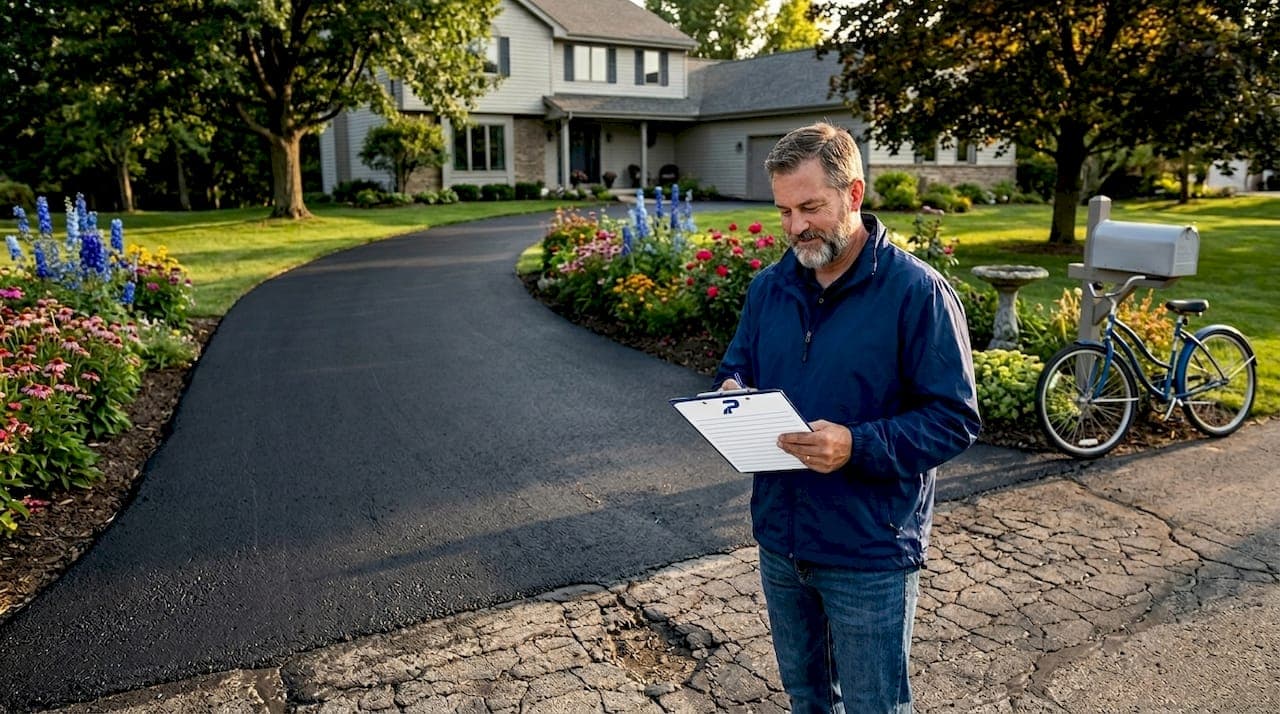
Asphalt looks simple from the outside. You see a smooth, dark surface and assume it either holds up or it doesn't. But the role of asphalt in durability goes far deeper than what you can observe at ground level. The real story lives inside the material itself: in binder chemistry, mixture design, moisture interaction, and how your surface responds to years of heat cycles and load stress. If you manage a driveway, parking lot, or sports court, understanding these factors is what separates a surface that lasts 25 years from one that needs work in 10.
Table of Contents
- Key takeaways
- The role of asphalt in durability: what's actually happening under your feet
- How aging and weather break asphalt down
- Improving asphalt life through smarter mix design
- Maintenance decisions that actually extend pavement life
- Durability for driveways, parking lots, and sports courts
- My honest take on where property owners get this wrong
- How Pinnaclepave helps you get durable pavement right
- FAQ
Key takeaways
| Point | Details |
|---|---|
| Durability starts with mix design | Engineered asphalt mixtures with proper binder grades and aggregates outperform basic mixes in real-world conditions. |
| Aging begins immediately | Oxidation and stiffness changes start within the first service cycle, making early maintenance more impactful than late repairs. |
| Moisture is the hidden threat | Water infiltrating the asphalt-aggregate interface causes invisible damage long before cracks appear on the surface. |
| Overlay vs. replacement depends on structure | Surface wear calls for overlay; base or drainage failure requires full replacement to avoid compounding the problem. |
| Professional assessment prevents costly mistakes | Skipping a structural evaluation before resurfacing is one of the most expensive decisions a property owner can make. |
The role of asphalt in durability: what's actually happening under your feet
Most people think of asphalt as a single material. It isn't. Asphalt pavement is a carefully engineered combination of aggregates (crushed stone, sand, gravel) and asphalt binder, a petroleum-derived material that holds everything together and gives the surface its flexibility. The industry term for this engineered mix is hot mix asphalt (HMA), and the performance of your pavement depends almost entirely on how well that mixture is designed and placed.
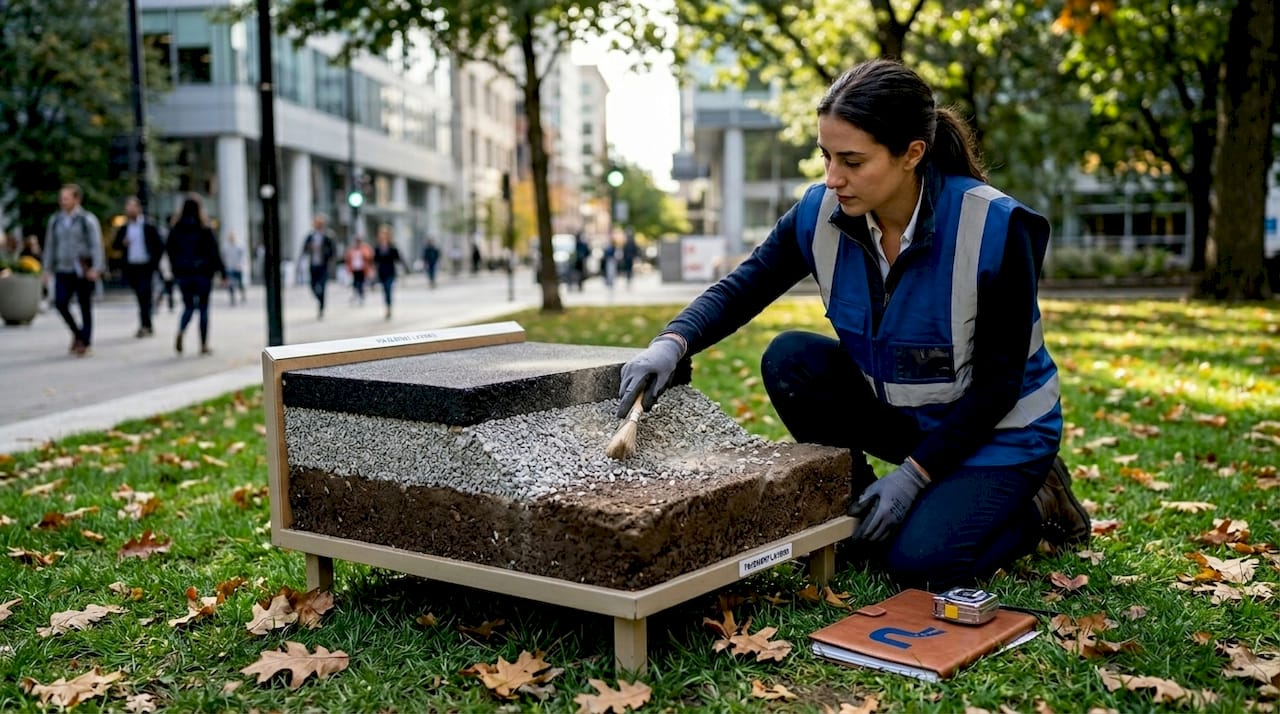
The binder is where durability lives. It has to be soft enough to flex under traffic loads without cracking, yet stiff enough to resist deformation in summer heat. Binder grade selection depends on your climate. In Tennessee, that means choosing grades that handle high summer temperatures without rutting and cold winters without becoming brittle.
Here's what most property owners don't realize: asphalt durability in service is governed by mixture-level performance targets like rutting resistance and moisture damage resistance, not surface appearance. A lot looks fine until it suddenly doesn't. By then, the structural work needed is far more expensive.
Three material properties determine how your pavement will perform over time:
- Stiffness (modulus): Too stiff and the surface cracks under thermal stress. Too flexible and it ruts under load. The sweet spot is mix-specific.
- Adhesion at the aggregate interface: The bond between binder and stone particles is what moisture attacks first. Weak adhesion means early raveling and cracking.
- Binder aging resistance: All asphalt binders oxidize over time, becoming stiffer and more brittle. How fast that happens depends on the original binder chemistry and mix design.
Pro Tip: Ask your contractor which performance grade (PG) binder they're specifying for your job. A PG 76-22, for example, is engineered for high-heat rutting resistance. If they can't answer the question, that tells you something important.
How aging and weather break asphalt down
Asphalt doesn't fail overnight. It fails through a slow accumulation of chemical and physical changes driven by UV exposure, heat, moisture, and traffic. Understanding the sequence helps you catch problems before they become expensive.
Here's how the degradation process typically unfolds:
- Oxidation begins immediately. The most pronounced chemical aging changes in asphalt binders occur during the first aging cycle after placement. Heat and oxygen react with the binder, increasing stiffness and reducing flexibility.
- UV and heat work together. UV, moisture, and thermal oxidation synergistically accelerate bitumen aging, increasing rigidity and making the surface more susceptible to fatigue cracking and raveling. Neither factor alone tells the full story.
- Moisture infiltrates the matrix. Once small cracks form from surface oxidation, water finds its way in. At the asphalt-aggregate interface, water breaks the adhesive bond between binder and stone, causing adhesion and cohesion loss that accelerates cracking and raveling, often invisible until advanced stages.
- Freeze-thaw cycles compound the damage. Water inside a cracked pavement expands when it freezes. That expansion widens cracks, pushes aggregate particles apart, and accelerates structural failure from the inside out.
- Surface distress becomes visible. By the time you see raveling, alligator cracking, or significant rutting, the pavement has already lost a significant portion of its structural capacity.
"Single-factor explanations for pavement failure are misleading. Maintenance must address UV, heat, and moisture simultaneously, because these forces work together to degrade asphalt much faster than any one of them acting alone."
The takeaway for property owners is this: your maintenance calendar needs to start early, not when damage becomes obvious. A surface that looks intact at year five may already be well into oxidative aging at the binder level.
Improving asphalt life through smarter mix design
The biggest durability gains happen before a single ton of asphalt is placed. This is where engineered mix design separates pavements that last 50 years from ones that need rehabilitation in 15.
One of the most practical improvements available today is crumb rubber modification (CRM). Adding 15% crumb rubber to asphalt mixtures increases stability by 24%, reduces rutting depth by 29%, and improves moisture resistance (measured by tensile strength ratio, or TSR) from 73% to 81%. For a parking lot that sees daily delivery truck traffic, those numbers translate directly into fewer repairs and a longer service life.
The table below compares standard and modified asphalt on the performance metrics that matter most:
| Performance metric | Standard HMA | Crumb rubber modified HMA |
|---|---|---|
| Marshall stability | Baseline | +24% improvement |
| Rutting depth | Baseline | 29% reduction |
| Moisture resistance (TSR) | ~73% | ~81% |
| Fatigue cracking resistance | Moderate | Significantly improved |
| Estimated service life extension | 15-20 years | 20-30+ years |
Recycled asphalt pavement (RAP) is another option that reduces material costs while maintaining performance when used at appropriate percentages. The key is testing. Tensile strength ratio (TSR) testing confirms moisture resistance. Marshall stability testing confirms load-bearing capacity. These aren't optional checks for quality-conscious work. They're the difference between a guess and a guarantee.
Pro Tip: When getting bids for new asphalt work, ask whether the contractor is pulling mix design documentation. A reputable contractor will have it. That document tells you exactly what you're getting and gives you a benchmark for future maintenance decisions.
For right asphalt mix selection, the grade of aggregate, percentage of binder, and any modifications should match your specific traffic loads and climate conditions. Generic mixes applied to specific problems are a common source of premature failure.
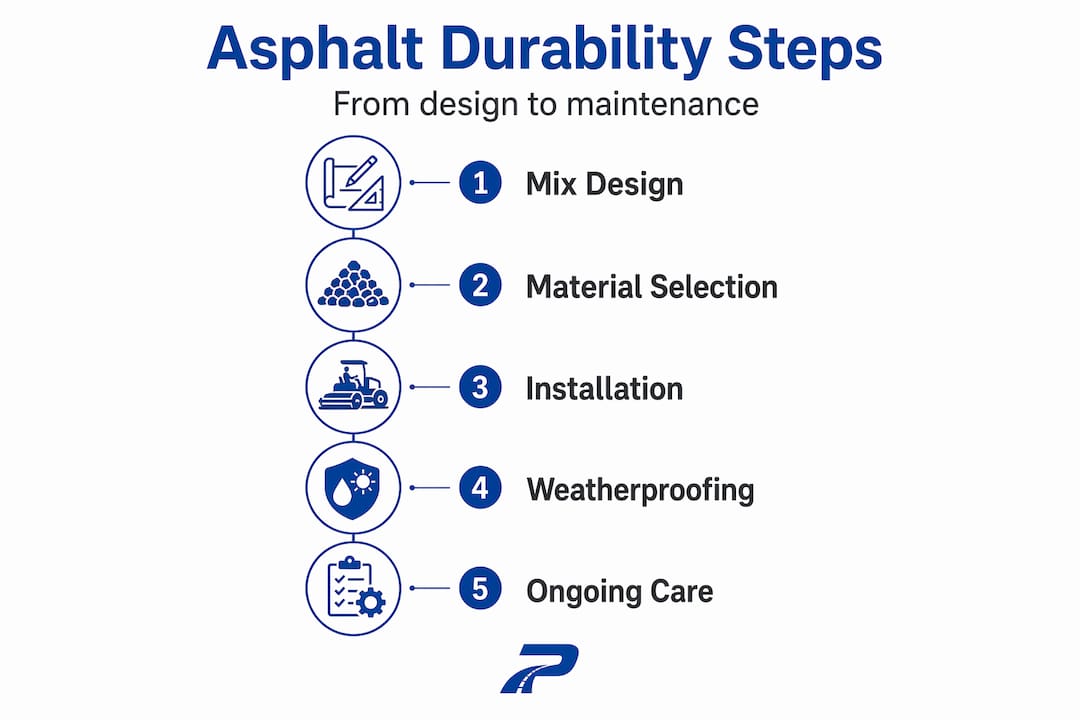
Maintenance decisions that actually extend pavement life
Knowing when to maintain, overlay, or replace is where property managers either protect or waste their pavement investment. The decision isn't complicated, but it requires honest assessment of what's actually failing.
Use these criteria to guide your decision-making:
- Sealcoating (1 to 3 years): Apply a quality sealcoat on surfaces that are structurally sound but showing surface oxidation. Sealcoating slows UV and moisture penetration and extends the life of the binder significantly.
- Crack filling (as needed): Any crack wider than a quarter-inch is a moisture entry point. Fill it before winter. This is the lowest-cost, highest-return maintenance task available to you.
- Overlay (surface damage only): An overlay is appropriate when wear is confined to the surface layer and the base is still structurally intact. Driveway lifespan typically ranges 15 to 25 years, and overlay can add meaningful years when base conditions are good.
- Full replacement (structural or drainage failure): If the base has lost structural integrity, or drainage is routing water under the pavement, an overlay will fail prematurely. Overlay failure risk increases significantly when underlying structural or drainage issues aren't resolved first.
Vehicle loads matter more than most property owners expect. A single loaded delivery truck causes exponentially more pavement damage than dozens of passenger vehicles. If your parking lot regularly accommodates semi-trucks, your asphalt thickness and base design need to account for that, and your maintenance interval should be shorter.
For a deeper comparison of your repair options, the sealcoat vs. resurfacing guide from Pinnaclepave breaks down exactly when each approach makes sense based on surface condition.
Durability for driveways, parking lots, and sports courts
Not all asphalt surfaces live the same life, and the importance of asphalt in pavement performance looks different depending on the application.
Driveways typically handle lighter loads but are highly vulnerable to UV oxidation because of their surface-to-shade ratio. Residential driveways often sit fully exposed to sunlight all day. A 2-inch wear course over a properly compacted base is standard, but many failures trace back to inadequate base depth or poor drainage grading at installation.
Parking lots face a different challenge: concentrated stress at entry points, stall corners, and areas where vehicles idle or turn slowly. Slow-moving heavy loads generate more rutting damage than fast-moving ones. The asphalt performance in weather conditions matters here because a lot sitting in direct sun at 95°F is already near the softening point of a lower-grade binder. Specify the right PG binder for your climate, or you'll be patching ruts every two years.
Sports courts built on asphalt need particular attention to surface smoothness and crack prevention. A basketball court with a 3mm crack will cause ball bounce irregularities and surface coating failures. For sports surfaces, the base must be perfectly graded for drainage without surface slope, and the top lift of asphalt needs to be a fine-grade mix to accept the acrylic color coating properly. Pinnaclepave's sports court installation work accounts for these specific tolerances from the ground up.
My honest take on where property owners get this wrong
I've seen a lot of asphalt fail earlier than it should. And almost every time, the problem started before the first truck ever showed up on the job.
The biggest misconception I encounter is that a good-looking surface is a durable one. It isn't. Oxidation-induced aging shifts binder properties early after placement, affecting stiffness and deformation resistance in ways that are completely invisible from the surface. A parking lot that looks great at year two may already be on a poor durability trajectory because of binder selection or compaction issues during construction.
The second thing I see constantly is people treating moisture damage as a future problem. It isn't. Water is working on your pavement from the first season. Preventing moisture ingress into asphalt-aggregate interfaces is what preserves mechanical integrity over the long haul. That means sealing on schedule, filling cracks when they're small, and making sure your drainage is actually moving water away from the pavement.
My honest advice: invest in the right mix design and quality installation upfront. The cost difference between a properly engineered mix and a budget pour is small compared to the cost difference in service life. And once you have a good surface, maintain it on a schedule, not when it looks bad.
— Dillan
How Pinnaclepave helps you get durable pavement right
When asphalt durability benefits come down to material selection, proper installation, and timely maintenance, having the right contractor makes the difference between a surface that holds up and one that's costing you money within five years. Pinnaclepave brings engineering-informed practices to every job, from full-depth asphalt paving and repair to protective sealcoating that slows oxidation and extends pavement life. Whether you're managing a commercial parking lot, a warehouse drive aisle, or a custom sports court in Tennessee, Pinnaclepave provides professional assessment, quality-controlled installation, and drone-documented results. Contact Pinnaclepave to get a straightforward evaluation of your surface and a plan that actually fits your property.
FAQ
What does the role of asphalt in durability actually mean?
Asphalt durability refers to how well the pavement resists rutting, cracking, moisture damage, and aging over time. It depends on binder chemistry, mixture design, construction quality, and ongoing maintenance, not just surface appearance.
How long does asphalt typically last on a driveway or parking lot?
Asphalt driveways and parking lots typically last 15 to 25 years depending on base condition, climate, traffic loads, and maintenance frequency. Proper sealcoating and crack repair can push that lifespan toward the upper end.
When should I choose overlay instead of full replacement?
Choose overlay when surface wear is the primary issue and the base is structurally sound. Full replacement is necessary when the base has lost integrity or drainage is compromised, because an overlay over a failed base will fail prematurely.
How does moisture damage asphalt from the inside?
Water infiltrates small cracks and breaks the adhesive bond between the asphalt binder and aggregate particles. This causes raveling and cracking that's often invisible until the damage is severe, which is why moisture sensitivity testing matters beyond visual inspection.
Does modified asphalt actually perform better, or is it just a sales pitch?
The data is clear. Adding crumb rubber to asphalt mixtures increases stability, reduces rutting depth, and improves moisture resistance measurably. For high-traffic surfaces, the performance improvement justifies the modest cost increase by extending service life by years.