
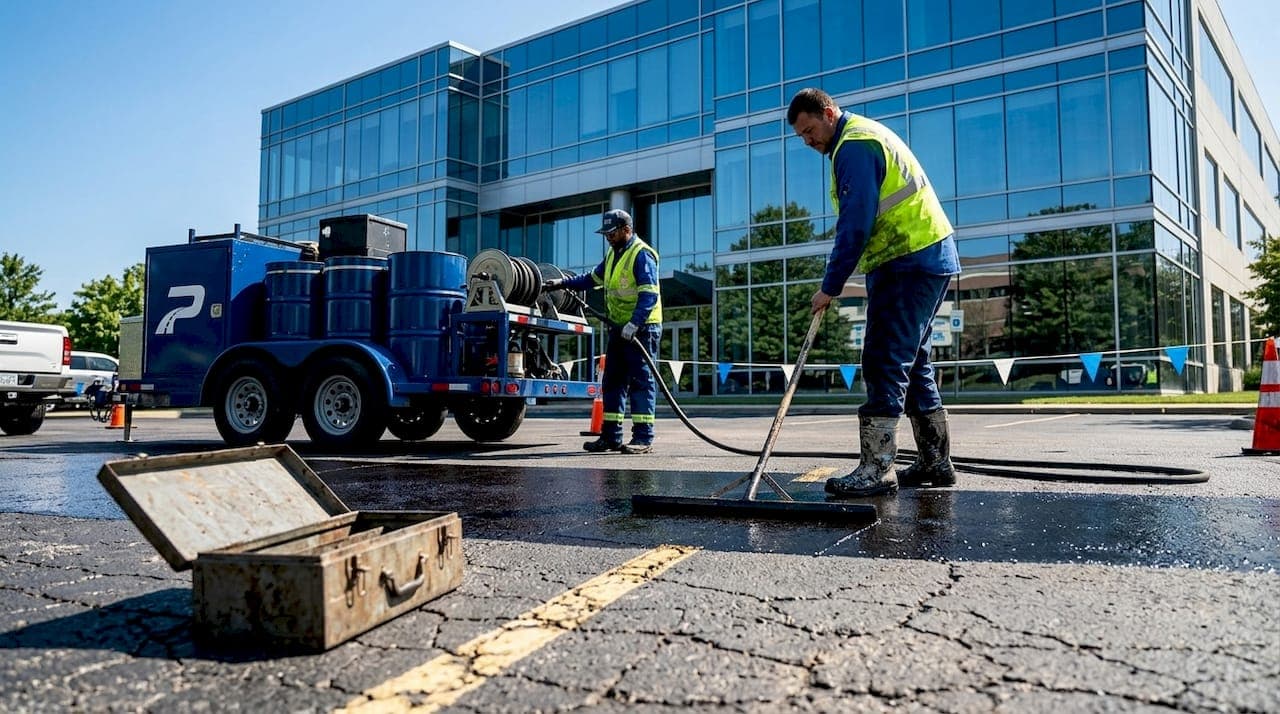
Not all sealcoating products are the same, and assuming they are is one of the most expensive mistakes a property owner can make. With sealcoating materials explained properly, you can protect your asphalt investment, avoid regulatory headaches, and get results that actually last. Whether you manage a commercial parking lot in Nashville or a residential driveway in the suburbs, the material you choose determines how long your pavement holds up against UV rays, oil spills, freeze-thaw cycles, and daily traffic. Here's what you actually need to know before your next sealcoating project.
Table of Contents
- Key takeaways
- Sealcoating materials explained: how they protect your asphalt
- Comparing the main types of sealcoating materials
- The role of additives in sealcoating performance
- How application method affects material performance
- How to choose the right sealcoating materials
- My honest take on sealcoating material choices
- Get professional sealcoating guidance from Pinnaclepave
- FAQ
Key takeaways
| Point | Details |
|---|---|
| Not all sealers perform the same | Coal tar, asphalt emulsion, and acrylic each offer different durability, cost, and regulatory compliance profiles. |
| Regulations restrict coal tar | Multiple U.S. states and Canada now ban or limit coal tar sealers due to high PAH concentrations in the product. |
| Additives change everything | Polymer modifiers and fast-dry agents can dramatically improve or damage a sealer if chosen incorrectly. |
| Application method matters | Spray, squeegee, and hybrid methods each suit different materials and surface conditions. |
| Match material to your property | Traffic level, climate, asphalt age, and local laws should all inform which sealcoating product you select. |
Sealcoating materials explained: how they protect your asphalt
At its core, sealcoating is a thin protective film applied over an existing asphalt surface. Think of it like sunscreen for your pavement. It absorbs punishment so the asphalt underneath doesn't have to. Regular sealcoating reduces oxidation, water penetration, and surface cracking while improving flexibility and curb appeal, all of which delays far more costly repairs down the road.
Sealcoating materials typically consist of a base product combined with water, fillers, and additives. The base is usually one of three things: a coal tar emulsion, an asphalt-based emulsion, or an acrylic polymer system. Each base performs differently depending on environmental exposure and traffic conditions. Fillers like silica sand add texture for traction and body to the mix, while specialty additives tune performance for specific needs.
The protective mechanism works in two ways. First, the sealer forms a sacrificial layer that takes on UV radiation and surface wear so the asphalt binder beneath stays intact. Second, it seals microscopic pores in the pavement surface, blocking water and deicing salts from working their way in and weakening the aggregate structure from below. The result: your asphalt stays flexible longer and resists the cracking and crumbling that signals expensive structural failure.
Key protective functions of sealcoating materials include:
- Blocking UV rays that oxidize and harden the asphalt binder
- Preventing water infiltration that accelerates freeze-thaw damage
- Resisting oil and gas spills that soften and degrade the surface
- Restoring surface color and improving traction after weathering
- Extending overall pavement life significantly to delay full resurfacing costs
Comparing the main types of sealcoating materials
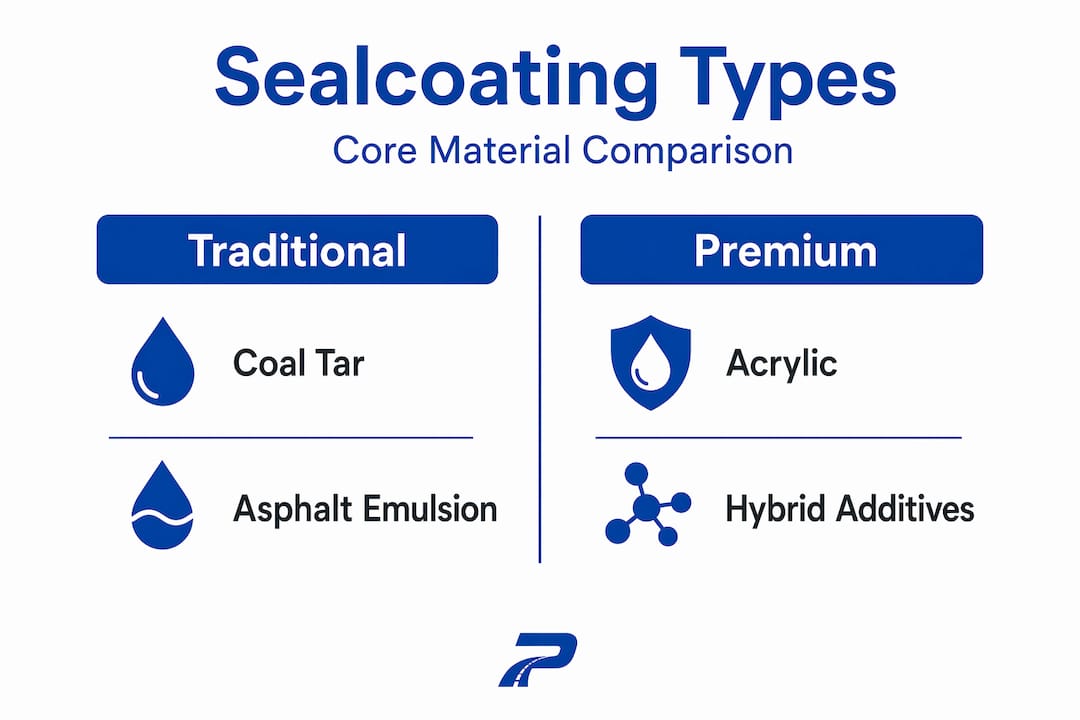
Understanding the three core types is the foundation of making a smart purchase decision. Each has a distinct composition, performance profile, and set of trade-offs.
Coal tar sealers
Coal tar sealers have been the industry workhorse for decades, and for good reason. Coal tar products last 3 to 5 years per coat and provide excellent resistance to oil, gas, and chemical spills. They produce that deep, dark, almost glossy finish many property owners associate with a freshly sealed parking lot. Historically, they were the go-to choice for high-traffic commercial settings like gas stations or fast-food drive-throughs where fuel spills are common.
The problem is regulation. Coal tar contains polycyclic aromatic hydrocarbons, or PAHs, which are classified as environmental contaminants. Coal tar is banned or restricted in Washington state, Minnesota, Washington D.C., and other jurisdictions, and the list keeps growing. In Canada, PAH concentration in sealants must not exceed 1,000 ppm, with manufacture and import banned starting October 1, 2025, and sales banned after December 31, 2025.
Asphalt emulsion sealers
Asphalt emulsion is the most widely used sealer in North America today, largely because it sidesteps coal tar's regulatory issues entirely. Asphalt emulsions are legal nationwide, bond well to asphalt surfaces, produce a matte finish, and carry a durability window of roughly 2 to 3 years per coat. They cost less than acrylic and significantly less than coal tar in markets where coal tar is still available commercially.
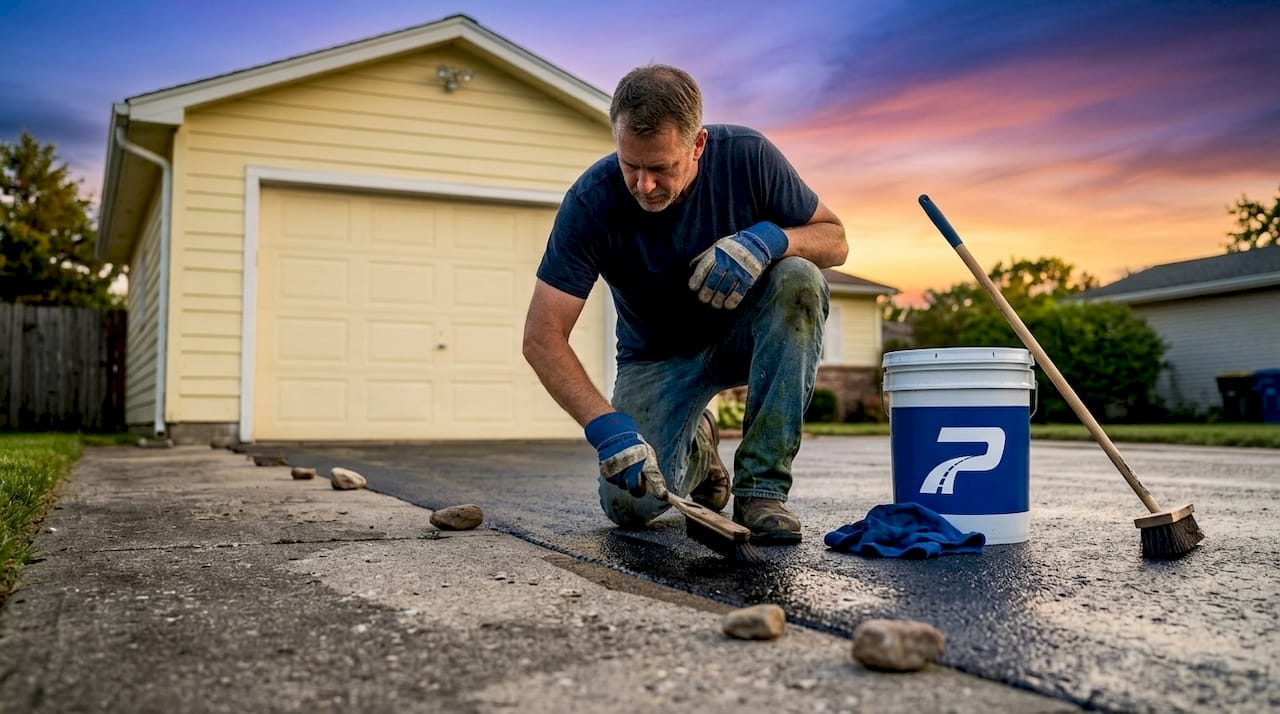
The trade-off is modest oil resistance compared to coal tar. For most residential driveways and lower-traffic commercial lots, that trade-off is entirely acceptable. Asphalt emulsion is the practical, cost-effective default for most property owners.
Acrylic sealers
Acrylic sealers occupy the premium tier. Acrylic sealers provide superior UV protection and last 3 to 5 years, curing through polymer cross-linking for a semi-gloss finish with excellent color retention. They perform best on new or recently resurfaced asphalt and in climates with intense sun exposure, making them a smart pick for properties in the Southeast or Southwest.
The upside is longevity and appearance. The downside is cost, which runs notably higher per gallon than asphalt emulsion. For high-visibility commercial properties where curb appeal directly affects customer perception, the premium is often worth it.
Sealcoating material comparison
| Material | Durability | Cost | Appearance | Oil Resistance | Regulatory Status |
|---|---|---|---|---|---|
| Coal tar | 3 to 5 years | Moderate | High-gloss, very dark | Excellent | Banned or restricted in many areas |
| Asphalt emulsion | 2 to 3 years | Low to moderate | Matte, dark gray | Good | Legal nationwide |
| Acrylic | 3 to 5 years | Higher | Semi-gloss, rich color | Moderate | Legal, no restrictions |
Pro Tip: Before purchasing any sealer, verify the product's PAH content with written documentation from the manufacturer. Relying on appearance or coverage claims alone leaves you exposed to compliance risk, especially if you operate in multiple states or manage properties in Canada.
The role of additives in sealcoating performance
If sealcoating material is the foundation, additives are the fine-tuning. They adjust specific performance characteristics without changing the base product. Polymer and latex modifiers enhance flexibility, chemical resistance, and drying speed, making them among the most commonly used enhancements in professional applications.
Here's what each major additive category does:
- Polymer modifiers: Improve film flexibility and resistance to cracking in temperature extremes
- Fast-dry agents: Accelerate curing time, reducing traffic closure windows on busy commercial lots
- Adhesion promoters: Strengthen the bond between sealer and aged or weathered asphalt surfaces
- Thickening agents: Increase body in the mix to fill minor surface voids and improve texture uniformity
- Sand and grit additives: Boost surface traction and reduce slip hazards, especially in parking structures
The caution here is real. Incorrect additive choices can cause premature coating failure by introducing incompatible chemistry into the mix. Not every additive works with every base product. Using a latex modifier designed for one sealer system in a different base can compromise the entire film's integrity.
Pro Tip: Always check additive compatibility with the base product manufacturer before mixing. What works brilliantly with one asphalt emulsion may cause delamination or uneven curing in another brand's formula.
Additives are also not a universal fix. They work best when used to solve a specific performance gap, not as a default "boost" added to every batch. A fast-dry agent makes sense when you're sealing a parking lot that needs to reopen in hours. It adds unnecessary cost and potential compatibility risk on a quiet residential driveway where curing time is irrelevant.
How application method affects material performance
Choosing the right material and additives is half the equation. How the sealer gets applied determines whether those material properties actually translate to pavement protection.
Spray application uses pressurized equipment to distribute sealer evenly across the surface. It works fast, covers large areas efficiently, and produces a very uniform appearance. It's the preferred method for newer, smoother asphalt surfaces where the goal is a clean, consistent finish on a tight schedule.
Squeegee application pushes the sealer material across and into the surface by hand or machine. The mechanical pressure forces sealer down into voids and micro-cracks rather than sitting on top of them. For older or more porous asphalt surfaces, this contact-based technique delivers better adhesion and penetration.
Hybrid application combines both. Squeegee is used first to force material into voids, followed by spray for uniform coverage and a smooth finish. Many professional contractors, including the team at Pinnaclepave, default to hybrid methods on commercial lots because it balances penetration depth with surface uniformity.
One point that gets overlooked: surface preparation determines how well any application method performs. Cleaning, debris removal, crack repair, and edge preparation must happen before the sealer goes down. Sealcoating over a dirty or cracked surface is like painting over rust. It looks fine for a season, then peels and fails early. If you're weighing your options between sealcoating versus full resurfacing, proper surface prep also informs which approach makes financial sense.
How to choose the right sealcoating materials
With three material types, a range of additives, and multiple application methods to consider, it helps to have a clear framework. Here's how to work through the decision:
- Assess your asphalt's age and condition. New or recently resurfaced asphalt benefits from acrylic for long-term protection. Older surfaces with surface oxidation and minor texture loss are ideal candidates for asphalt emulsion with a squeegee application.
- Factor in traffic volume. High-traffic commercial lots, especially those with frequent vehicle fluid exposure, benefit from coal tar's chemical resistance where it's still legal. For most commercial and residential applications, asphalt emulsion performs well.
- Check your local regulations. Before specifying coal tar, verify its legal status in your jurisdiction. The regulatory landscape has shifted significantly, and using a restricted product can result in fines and remediation costs. Checking PAH limits is the safest compliance step before any purchase.
- Evaluate sun exposure and climate. Properties in high-UV climates or on south-facing exposures get the most out of acrylic's UV protection and color retention. Properties in northern climates with heavy freeze-thaw cycling need a sealer with strong flexibility and water resistance.
- Set a realistic budget. Asphalt emulsion gives the best value for most property types. Acrylic costs more upfront but extends maintenance intervals, which can balance the budget over a three to five year horizon. Explore the top sealcoating benefits for Tennessee properties to understand how long-term value stacks up in a Southern climate.
Pro Tip: Ask your sealcoating contractor for the product's solids content percentage before work begins. Higher solids content means more protective material left on the surface after water evaporates. Products marketed as professional-grade with low solids content are selling you mostly water.
My honest take on sealcoating material choices
I've seen property owners choose sealcoating products based entirely on price per bucket or how dark the finished surface looks. Both of those metrics will lead you astray. The material that costs the least per gallon often requires reapplication within a year, and a darker finish from an outdated coal tar product can put your property out of compliance with local environmental rules.
What I've learned from working in this industry is that the biggest mistakes don't happen at the job site. They happen before the first drop of sealer hits the pavement, when someone skips the product spec review, ignores additive compatibility, or chooses a material without checking local PAH regulations. Regulations on coal tar have tightened faster than most property managers realize, and the gap between what was acceptable five years ago and what's legal today is significant.
My honest recommendation: default to a quality asphalt emulsion with appropriate polymer additives for most residential and standard commercial properties. Reserve acrylic for premium applications where appearance and long-term durability justify the cost. And if someone quotes you coal tar without discussing regulatory compliance first, ask harder questions. Protecting your pavement and protecting your property from liability go together.
— Dillan
Get professional sealcoating guidance from Pinnaclepave
Knowing your sealcoating options is the first step. Executing them correctly is where real pavement protection happens. Pinnaclepave brings that execution to commercial properties, parking lots, and residential driveways across Tennessee, with material selection tailored to your surface condition, local regulations, and budget. The team uses industry-best preparation practices, verified compliant products, and professional application equipment to deliver results that hold up through real-world conditions.
Whether your lot needs a straightforward asphalt emulsion refresh or a premium acrylic treatment, Pinnaclepave handles the full process from surface prep to final coat. Every job is documented so you can see exactly what was done and how. Visit Pinnaclepave's sealcoating services to learn more, or explore the full range of pavement solutions from Pinnaclepave to find the right fit for your property.
FAQ
What are the main types of sealcoating materials?
The three primary types are coal tar, asphalt emulsion, and acrylic sealers. Each differs in durability, cost, oil resistance, UV protection, and regulatory compliance.
Is coal tar sealcoating still legal?
Coal tar is banned or restricted in many U.S. states and Canadian jurisdictions due to high PAH levels. Always verify local regulations before specifying coal tar on any project.
How long does sealcoating last?
Asphalt emulsion lasts roughly 2 to 3 years per coat, while coal tar and acrylic sealers can last 3 to 5 years depending on traffic, climate, and application quality.
Do sealcoating additives actually make a difference?
Yes. Polymer modifiers improve flexibility and chemical resistance, while fast-dry agents reduce curing time. However, using incompatible additives can cause premature film failure, so match additives to the base product carefully.
What's the best sealcoating option for a commercial parking lot?
Asphalt emulsion is the most practical choice for most commercial lots because it's cost-effective, widely legal, and performs well across traffic levels. High-visibility or high-sun properties may benefit from upgrading to acrylic.