
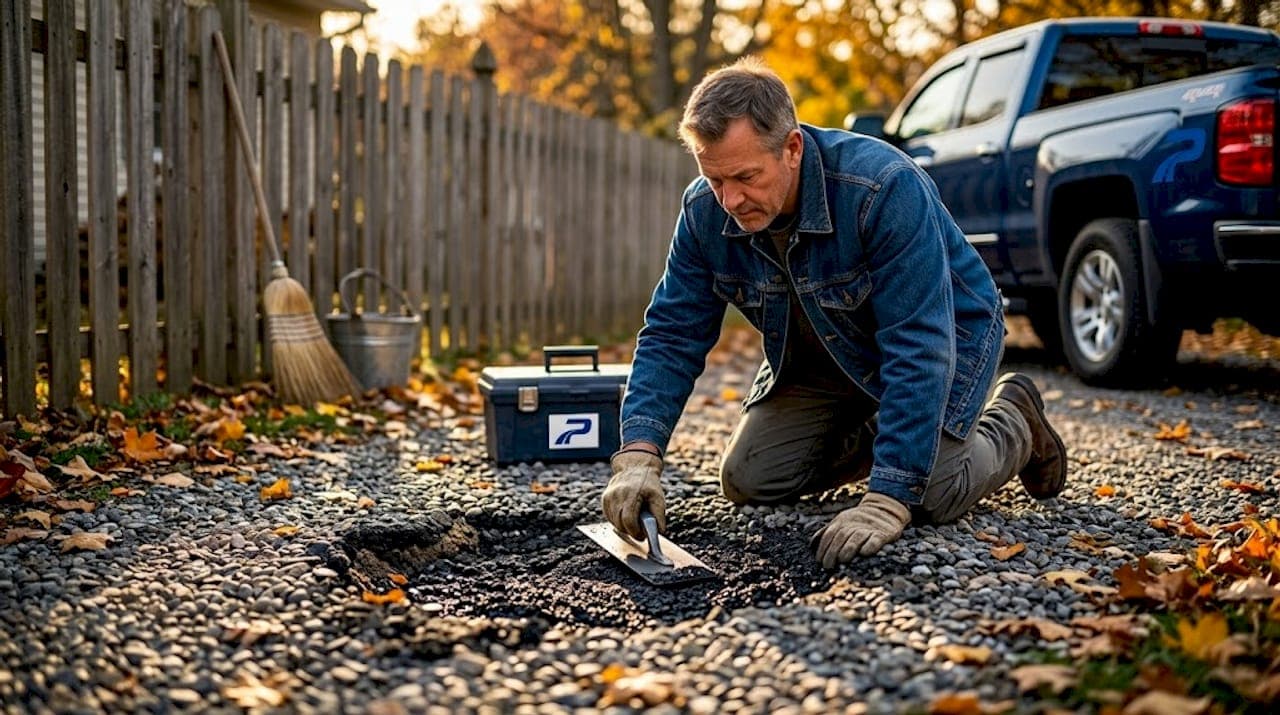
A single pothole in your parking lot or driveway is never just a minor inconvenience. It's a liability waiting to happen, a vehicle repair bill for your tenants or customers, and a signal that your pavement is already failing underneath. Knowing how to fix potholes correctly the first time saves you money, protects people on your property, and keeps your pavement looking professional. This guide walks you through everything from choosing the right materials to executing a repair that actually holds, along with the prevention habits that stop new ones from forming.
Table of Contents
- Key takeaways
- How to fix potholes: materials and tools you need first
- Pothole repair step by step for durable results
- Common mistakes that cause patch failure
- Pothole prevention tips that actually save you money
- My honest take on what makes pothole repairs last
- Let Pinnaclepave handle the heavy lifting
- FAQ
Key takeaways
| Point | Details |
|---|---|
| Surface prep determines success | Dry, debris-free surfaces with vertical edges are what separate lasting repairs from patches that fail in weeks. |
| Material choice matters | Hot mix asphalt is best for permanent repairs; cold mix works for temporary fixes or cold-weather situations. |
| Compact in layers | Filling a pothole all at once causes poor compaction; apply asphalt in 2-inch lifts and compact each one. |
| Prevention beats repair | Crack sealing and sealcoating on schedule cost far less than repeated patching or full-depth replacement. |
| Know when to call a pro | Deep structural damage or large areas of failure need professional full-depth patching, not a DIY cold patch. |
How to fix potholes: materials and tools you need first
Getting the materials right before you touch the pothole is what separates a three-year repair from one that crumbles by spring. There are two main asphalt materials to choose from, and each has a specific role.
Hot mix asphalt is the standard for permanent repairs. It's applied at around 300°F for optimal bonding and requires a contractor with the right equipment. If you manage a commercial parking lot and want a repair that genuinely lasts, hot mix is the right call.
Cold mix asphalt is the practical choice for property owners handling smaller potholes on their own. It requires 25% more material volume than hot mix and needs careful compaction, but it works in temperatures where hot mix simply isn't available. Think of it as the right tool for a two-inch pothole in your driveway, not a 10-foot crater in a busy lot.
| Material | Ideal temp range | Relative cost | Best use case |
|---|---|---|---|
| Cold mix asphalt | 35°F and above | Low | Temporary or small DIY repairs |
| Hot mix asphalt | Applied at ~300°F | Moderate to high | Permanent commercial repairs |
| UPM cold patch | Wide range | Moderate | Year-round semi-permanent fixes |
| Throw-and-roll bags | Any | Low | Emergency temporary patch |
Beyond material, you need the right tools on site before you start:
- Square-nose spade or cold chisel for cutting vertical edges around the repair zone
- Asphalt tamper or plate compactor for proper compaction
- Asphalt rake for spreading filler evenly
- Leaf blower or propane torch for drying the base
- Tack coat sprayer or brush for bonding primer
- Safety gear: gloves, eye protection, steel-toed boots, and high-visibility vest
Pro Tip: If you're using cold mix from a bag, store it somewhere warm before use in cold weather. Cold material compacts poorly and the patch will fail faster.
Pothole repair step by step for durable results
This is where most property owners and managers get it wrong. They scoop some cold patch into the hole, stomp on it once, and call it done. That approach typically fails within 60 to 90 days. The quality of surface preparation is the single biggest factor separating an amateur patch from a professional repair. Follow this sequence carefully.
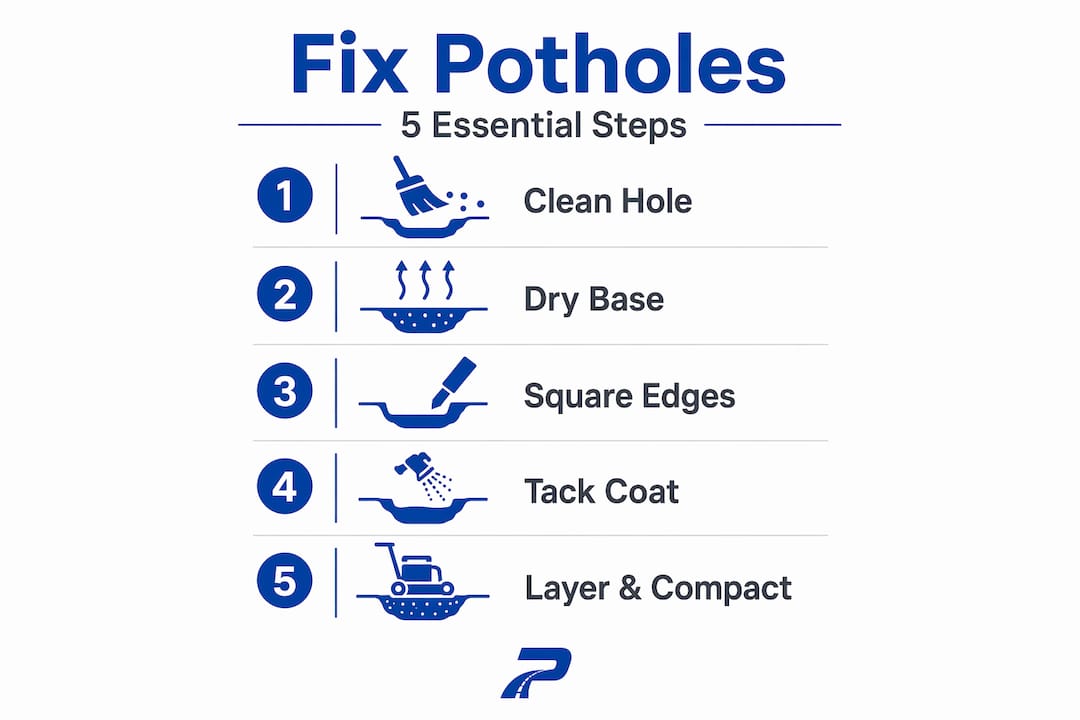
1. Clear and clean the pothole
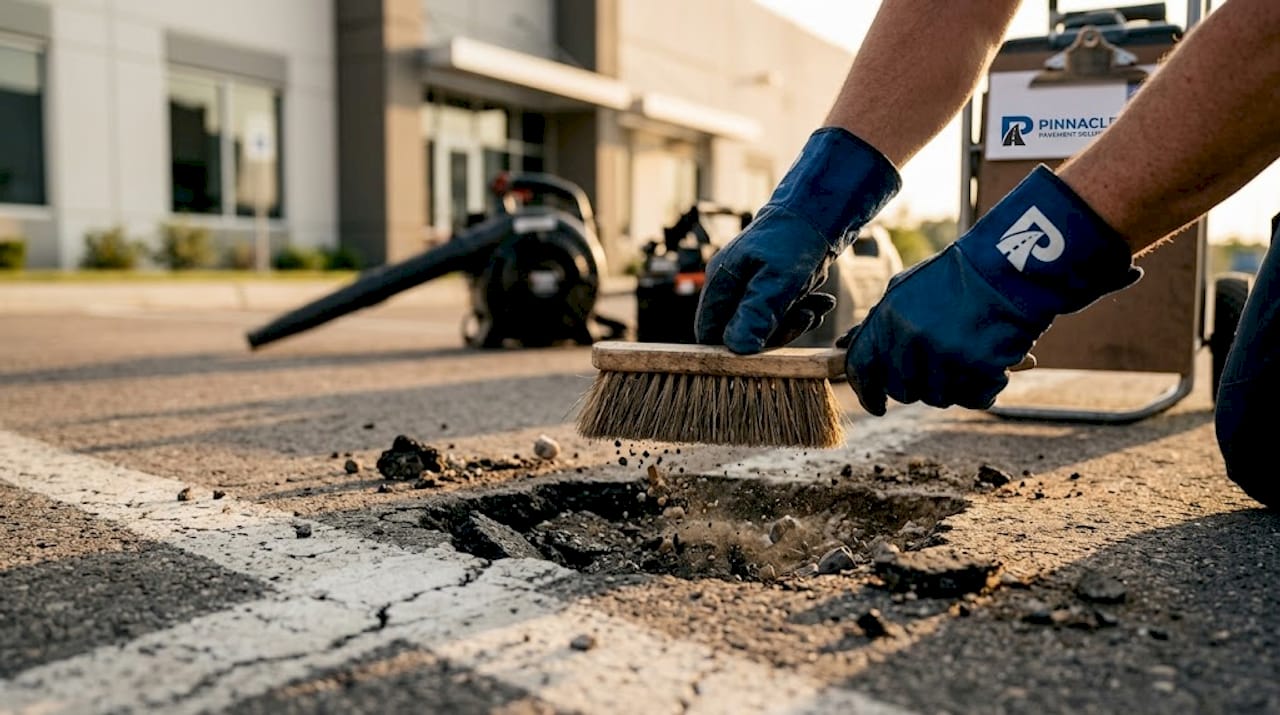
Remove all loose debris, standing water, and crumbled asphalt from the hole. Use a stiff brush or blower to clean the base and walls completely. Any dirt or wet material left behind will prevent the new asphalt from bonding.
2. Dry the base thoroughly
Failing to remove moisture is the number-one reason patches fail fast. Use a leaf blower to force moisture out of the base. For stubborn wet spots, a propane torch works well. Never patch over a wet base.
3. Square off the edges
Use a saw, cold chisel, or spade to cut the perimeter of the pothole straight down. You want vertical walls, not sloping sides. Vertical edges mechanically interlock with the new material and prevent the patch from shifting or cracking at the margins. Tapered edges are one of the most common failure points on amateur repairs.
4. Apply a tack coat
If you're using hot mix or doing a semi-permanent cold patch, brush or spray a thin layer of tack coat (asphalt emulsion) onto the walls and base of the hole. This acts as a bonding agent between the old and new material. Skip this step and you risk delamination, especially in high-traffic areas.
5. Fill in layers and compact each one
Pour in your asphalt material to a depth of roughly 2 inches. Compact it firmly with a tamper or plate compactor. Add another 2-inch lift and compact again. Repeat until the patch sits about half an inch above the surrounding pavement. Compaction to 92 to 96% density using a plate compactor removes air pockets and water channels that accelerate failure. Rushing this step is the biggest mistake DIYers make.
6. Final compaction and surface seal
Do one final pass with the compactor to bring the patch flush with the surrounding surface. For hot mix repairs, the patch can accept traffic within a few hours. For cold mix, give it at least 24 hours before heavy vehicle loads cross it. Apply a surface sealant around the patch perimeter to block water from sneaking under the edges.
- Work only when temperatures are above 41°F for proper bonding
- Avoid patching during rain or immediately after rain
- In summer heat, mist the compactor plate lightly to prevent sticking
- Document your repair with photos for property maintenance records
Pro Tip: For parking lots with multiple potholes, repair the deepest ones first. Deeper holes mean more structural failure beneath the surface, and those repairs will require more material and more compaction passes.
Common mistakes that cause patch failure
Understanding what goes wrong is just as useful as knowing the right steps. These are the errors that cause patches to pop loose within weeks.
- Patching over wet or dirty surfaces. Water trapped under a patch causes premature failure, particularly if the repair does not completely seal the surrounding cracks. This is consistent across most documented repair failures.
- Skipping edge preparation. Sloped or jagged edges give the new asphalt nothing solid to bond to. Always square the hole before filling.
- Under-compacting the fill material. A single stomp with a boot is not compaction. Plate compactors or hand tampers used in multiple passes are what create a stable repair.
- Using concrete in asphalt pavement. Concrete is not appropriate for pothole repairs on asphalt surfaces. It bonds differently, expands and contracts at different rates, and creates bigger problems when it needs to be removed later.
- Filling in one shot instead of layers. A thick single pour compacts unevenly and leaves voids in the center of the patch. Always use 2-inch lifts.
Temporary repairs often fail because they do not fully seal cracks or create strong material bonds. If your patch has failed twice in the same spot, the problem is almost certainly below the surface and requires full-depth repair, not another cold patch.
Recognizing when a repair is beyond DIY scope is critical. If the failed area is larger than a few square feet, if the base material is soft or shifting, or if the same spot keeps failing after multiple patches, you're dealing with structural subbase failure. That situation calls for professional full-depth patching, not another bag of cold mix. Trying to patch a structural failure is like putting tape over a cracked foundation.
Pothole prevention tips that actually save you money
Reactive repairs cost more than people realize. Untreated potholes can grow 300% faster during freeze-thaw cycles, and proactive maintenance extends pavement life by 10 to 15 years while cutting repair costs by around 50%. That math makes a strong case for investing in prevention.
Here's how to build a maintenance approach that keeps potholes from forming in the first place:
-
Seal cracks within 48 hours of spotting them. Crack sealing within 48 hours of discovering cracks wider than one-eighth of an inch stops water from getting underneath the surface. Water is the primary driver of pothole formation.
-
Sealcoat on a schedule. Applying sealcoat every three to five years protects the surface from UV damage and moisture. If your pavement looks gray and brittle, it's already oxidizing. Explore professional sealcoating services before the surface cracks further.
-
Fix drainage problems. Standing water on your pavement is a warning sign. Check that your lot or driveway has adequate slope toward drains. Pooling water accelerates surface breakdown faster than anything else.
-
Inspect edges and borders regularly. Pavement edges without proper support crumble first. Check curbs, borders, and aprons for signs of shifting or separation, and address them before they work inward.
-
Address minor depressions before they become holes. A one-inch depression is a pothole waiting to happen. Thin overlay or infrared patching at that stage costs a fraction of a full repair later.
Pro Tip: Schedule a pavement inspection every spring, right after the freeze-thaw season ends. That's when damage from winter moisture shows up most clearly and while repairs are easiest to make before summer traffic compounds the damage.
Consistent upkeep is what separates properties that look professional year after year from those that spend money on constant emergency repairs. A strong maintenance plan, documented in your property maintenance strategy, covers you legally and financially. It also protects your tenants, customers, and anyone else who drives or walks on your pavement.
My honest take on what makes pothole repairs last
I've seen the same scenario play out dozens of times. A property manager calls after a patch fails for the second or third time, frustrated and ready to just repave everything. Nine times out of ten, the original patch failed because of one of three reasons: a wet base, tapered edges, or under-compaction. None of those are material problems. They're process problems.
The uncomfortable truth about pothole repair is that potholes signal broader pavement failure, not just a surface flaw. If you're patching the same area repeatedly, something is wrong underneath. Quality repairs begin with an honest assessment of the subbase, not just what's visible at the surface.
What I've also found is that property owners consistently underestimate what potholes cost them in liability exposure. Potholes cause real vehicle damage that often goes unseen, and that means unhappy customers, potential complaints, and in some cases, legal claims. A well-executed repair doesn't just fill a hole. It protects your property's reputation.
My advice is straightforward. Do the prep work, use the right material for the job, and compact in layers. If the same spot fails twice, stop patching it and call a professional to assess the subbase. The money you spend on a proper fix once is always less than the money you lose fixing the same hole three times.
— Dillan
Let Pinnaclepave handle the heavy lifting

If your driveway or parking lot has potholes showing up faster than you can patch them, it's time to bring in a team that does this at a professional level. Pinnaclepave offers full-depth asphalt repair and patching designed to last, not just get through the season. We also handle sealcoating, parking lot striping, and complete surface maintenance for commercial properties, warehouses, and residential clients across Tennessee. Every job comes with honest pricing and documented results, so you know exactly what you're getting. Contact Pinnaclepave for a consultation and get your pavement assessed by people who know the difference between a surface fix and a real repair.
FAQ
What is pothole repair and why does it matter?
Pothole repair is the process of cleaning, preparing, and filling damaged asphalt to restore surface integrity and safety. Unrepaired potholes worsen rapidly and create vehicle damage, safety hazards, and liability exposure for property owners.
How deep should a pothole be before you repair it?
Repair any pothole that is one inch deep or more, or any depression that holds standing water. Municipalities often set intervention thresholds at around 1.57 inches deep, but waiting that long on private property increases damage and repair costs.
Can you fix potholes in cold weather?
Yes, with cold mix asphalt, which remains workable at lower temperatures. For best results, work above 35°F and keep your material warm before use. Hot mix asphalt requires professional equipment and is not practical for cold-weather DIY repairs.
How long does a pothole repair last?
A properly prepared cold mix patch can last six to twelve months. A hot mix repair with squared edges, tack coat, and proper compaction can last several years or more. Repeat patching without addressing root causes leads to rapid re-failure regardless of material used.
When should you hire a professional instead of DIY patching?
Call a professional when the damaged area exceeds a few square feet, when the same spot fails multiple times, or when the base material feels soft or unstable. These signs point to subbase failure that requires full-depth repair rather than surface patching.