

Driveway materials are the surface and structural layers that form your driveway, and ten standard options exist for residential properties in 2026: concrete, asphalt, gravel, brick, pavers, stamped concrete, turf, stone, tar-and-chip, and cobblestone. Each of these examples of driveway materials carries a different price point, lifespan, maintenance demand, and visual character. Choosing the wrong one for your climate or soil type costs you money within years. This guide breaks down every major driveway material option so you can match the right surface to your property, budget, and long-term goals.
1. Concrete driveways: the long-haul standard
Concrete is a mixture of Portland cement, aggregate, and water that cures into one of the most durable residential surfaces available. Concrete driveways last 25 to 30 years under normal conditions, though that figure drops to roughly 20 years in cold climates where freeze-thaw cycles stress improperly jointed slabs. That durability gap is almost entirely a function of installation quality, not the material itself.
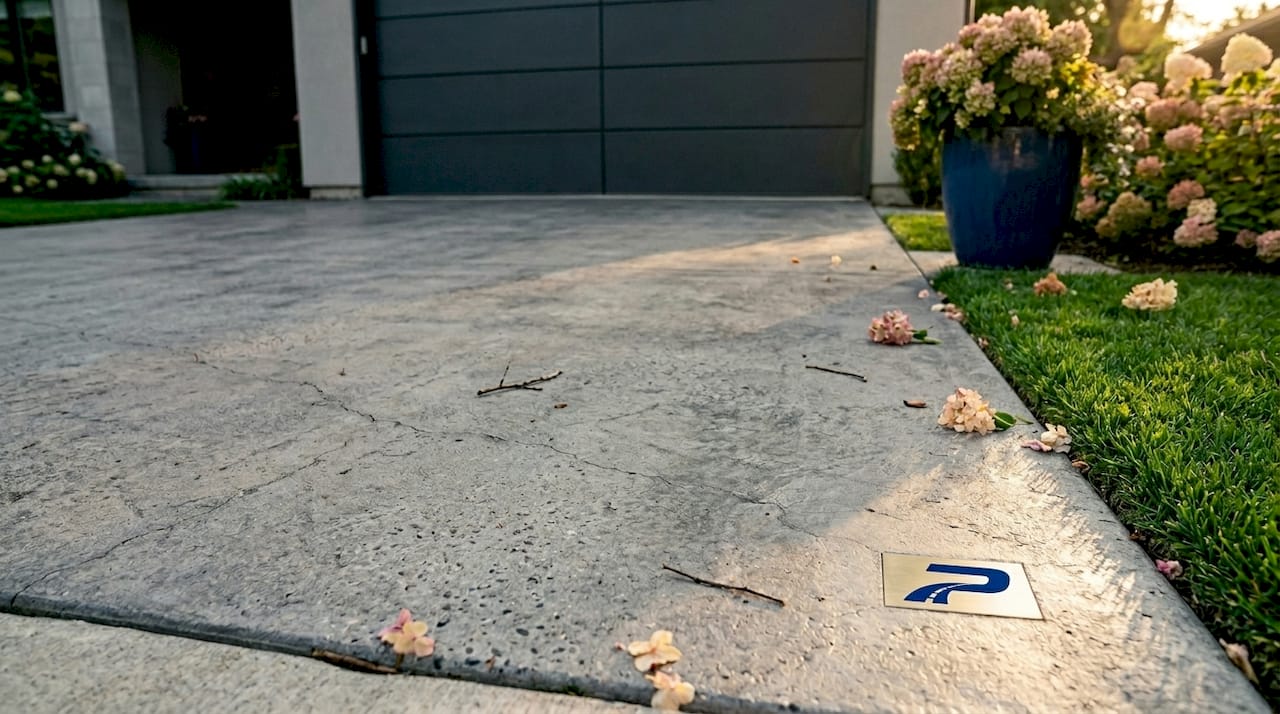
Installation costs run $6 to $11 per square foot, placing concrete in the mid-range of best driveway paving materials by upfront cost. The payoff is a surface that rarely needs more than periodic sealing and crack repair over its lifetime.
Key considerations for concrete driveways:
- Control joints placed every 8 to 10 feet prevent random cracking as the slab expands and contracts.
- Sealing every 3 to 5 years blocks moisture intrusion and staining from oil or road salt.
- Stamped concrete adds texture and color to mimic brick or stone at a fraction of the premium material cost.
- Thickness matters: a 4-inch slab handles passenger vehicles, while a 6-inch pour is standard for trucks or heavy SUVs.
Pro Tip: If you live in a region with hard winters, ask your contractor about air-entrained concrete. The microscopic air bubbles give the slab room to flex during freeze-thaw cycles, which directly extends its lifespan.
2. Asphalt driveways: cost-effective and cold-climate friendly
Asphalt is a petroleum-based material composed of aggregate bound with bitumen, producing the familiar black surface seen on most American residential driveways. It costs between $4 and $7 per square foot installed, making it one of the most affordable driveway materials among hard-surface options. That lower upfront cost comes with a maintenance requirement that concrete does not share.
Asphalt's lifespan runs 15 to 30 years depending on traffic load, climate, and maintenance consistency. The single most important maintenance task is sealcoating every 2 to 3 years, which seals surface oxidation, prevents water infiltration, and slows the cracking that leads to costly repairs. Skip sealcoating for a decade and you are looking at full replacement, not patching.
Asphalt performs particularly well in cold climates because its flexible composition absorbs freeze-thaw movement better than rigid concrete. For a deeper look at asphalt driveway lifespan factors, the base preparation and drainage design matter as much as the surface mix itself.
Asphalt driveway maintenance checklist:
- Sealcoat every 2 to 3 years starting one year after installation.
- Fill cracks wider than a quarter inch before they admit water.
- Avoid parking heavy equipment in the same spot repeatedly, especially in summer heat when asphalt softens.
- Restripe or edge-treat borders annually if you want a clean, defined look.
Pro Tip: Wait at least 6 to 12 months after a new asphalt installation before applying the first sealcoat. The surface needs time to cure fully, and sealing too early traps gases that cause bubbling.
3. Gravel and tar-and-chip: affordable, permeable options
Gravel is the most affordable driveway material available, with installation costs between $1 and $3 per square foot. That price point makes it the go-to choice for long rural driveways where paving the full length in concrete or asphalt would be prohibitively expensive. The trade-off is ongoing maintenance: gravel migrates, ruts form, and annual top-dressing is part of ownership.
Gravel driveway stability depends on correct aggregate sizing and compaction across three distinct layers. The base course uses large crushed stone (3 to 4 inches) for structural support, the middle course uses medium aggregate for drainage, and the top course uses smaller, angular gravel that locks together under traffic. Skipping proper compaction at any layer leads to rutting within the first season.
Tar-and-chip, also called chip seal, is a step above loose gravel. A layer of hot liquid asphalt is applied to a prepared base, then aggregate is rolled into the surface before it cures. The result looks more finished than gravel, costs roughly $2 to $5 per square foot, and lasts 7 to 10 years with minimal maintenance. It also retains gravel's natural permeability, which matters for stormwater management on larger properties.
Gravel and tar-and-chip at a glance:
- Gravel lifespan: 5 to 10 years before significant replenishment is needed.
- Tar-and-chip lifespan: 7 to 10 years with basic upkeep.
- Best use cases: Long driveways, rural properties, budget-conscious homeowners, and sites where drainage is a priority.
- Permeability advantage: Both surfaces allow rainwater to infiltrate the ground rather than run off into storm drains.
4. Brick, pavers, stamped concrete, and cobblestone
Premium decorative materials represent the top tier of driveway material options for homeowners focused on curb appeal and long-term property value. Brick, concrete pavers, natural stone pavers, and cobblestone all fall into this category, with costs ranging from $10 to $25 or more per square foot. That price reflects both the material quality and the skilled labor required for precise installation.
The payoff is a service life of 25 to 50 years for well-installed brick or paver driveways, which makes the per-year cost competitive with asphalt when you run the numbers over a full lifecycle. Individual pavers or bricks can also be removed and replaced if one section settles or cracks, unlike monolithic concrete that requires saw-cutting and patching.
| Material | Cost per sq ft | Lifespan | Maintenance level |
|---|---|---|---|
| Concrete pavers | $10 to $20 | 25 to 50 years | Low to moderate |
| Brick | $10 to $20 | 25 to 50 years | Low |
| Stamped concrete | $8 to $18 | 25 to 30 years | Moderate |
| Cobblestone | $15 to $30+ | 50+ years | Low |
Stamped concrete deserves special mention as the budget-conscious path to a decorative look. A skilled contractor can press molds into freshly poured concrete to replicate the appearance of brick, slate, or cobblestone at roughly half the cost of the real materials. The limitation is that stamped concrete is still a monolithic slab, so a crack runs across the pattern rather than isolating to a single replaceable unit.
Cobblestone is the most durable surface in this category. Natural granite cobblestones have been in use on European streets for centuries, and properly set cobblestone driveways require almost no maintenance beyond occasional re-sanding of joints. The installation cost is high, but for a historic home or upscale property in Tennessee, cobblestone signals permanence in a way no other material matches.
5. Permeable driveway materials and their environmental benefits
Permeable driveway materials are defined by their ability to allow rainwater to pass through the surface and infiltrate the soil below, reducing runoff and localized flooding. Gravel, pervious concrete, porous asphalt, and turf block pavers are the four most common permeable options for residential properties. This distinction matters more than most homeowners realize, particularly in municipalities that charge stormwater fees based on impervious surface area.
Porous asphalt and pervious concrete look nearly identical to their standard counterparts but are manufactured with a reduced fine-aggregate content that leaves interconnected voids throughout the material. Effective permeable driveway design requires soil infiltration rates between 0.1 and 10 inches per hour and a minimum 2-foot clearance to the groundwater table. If your soil drains poorly, a permeable surface alone will not solve a drainage problem without engineered base layers.
One misconception worth addressing directly: standard block paving can be completely impermeable despite looking identical to permeable pavers. Tight joints filled with compacted sand and a dense concrete base underneath create a waterproof system regardless of how the surface looks. True permeable pavers use open joints filled with gravel and a crushed stone base that acts as a reservoir before water moves into the soil. The surface appearance does not tell you whether a paver system is permeable. The joint and base construction does.
Pro Tip: If you are considering permeable pavers for stormwater credit in your municipality, ask your contractor to document the base specification in writing. Many local governments require proof of the base construction, not just the surface material, to qualify for fee reductions.
Turf block pavers, sometimes called grass pavers, are a niche but visually striking option. The concrete grid holds its structural shape under vehicle loads while grass grows through the openings, creating a surface that is nearly 100% permeable and blends into a lawn setting naturally.
Key takeaways
Matching driveway materials to your climate, budget, and maintenance capacity produces better long-term results than choosing based on appearance alone.
| Point | Details |
|---|---|
| Cost range is wide | Gravel starts at $1 per sq ft while cobblestone exceeds $30, so budget defines your realistic options. |
| Concrete outlasts asphalt | Concrete lasts 25 to 30 years versus 15 to 30 for asphalt, but asphalt costs less upfront and handles cold climates better. |
| Permeable systems require full-depth design | Surface material alone does not guarantee permeability. Base construction and soil infiltration rate determine performance. |
| Decorative materials pay back over time | Brick and pavers cost more upfront but last 25 to 50 years and allow individual unit replacement. |
| Maintenance extends every material's life | Sealcoating asphalt, sealing concrete, and replenishing gravel are the three highest-return maintenance tasks available. |
What I've learned after years of watching driveways fail
Most driveway failures I have seen come down to one decision made before a single load of material arrived on site: base preparation. Homeowners focus on the surface they can see and touch, but the 6 to 12 inches of compacted aggregate underneath is what actually determines whether a driveway lasts 10 years or 30. I have watched beautiful stamped concrete crack within three years because the contractor skimped on subbase depth. I have also seen a basic asphalt driveway hold up for 25 years because the crew took two extra days to properly grade and compact the base.
The second thing I would push back on is the idea that permeable materials are automatically better for the environment. A poorly designed permeable system that sits on clay soil with no engineered base just becomes a surface that pools water in the voids instead of running it off cleanly. Permeable driveway effectiveness depends on the entire system, from surface through base to soil. If you want genuine stormwater benefits, you need a contractor who understands hydrology, not just paving.
For Tennessee homeowners specifically, I lean toward asphalt for most residential driveways. The climate here is hard on rigid surfaces, the cost advantage over concrete is real, and a properly maintained asphalt driveway with consistent sealcoating will outlast a neglected concrete slab every time. If curb appeal is the priority and budget allows, concrete pavers installed over a proper base are worth every dollar. They look better at year 20 than they did at installation.
— Dillan
Protect your driveway investment with Pinnaclepave
Choosing the right surface is only half the equation. Professional installation and scheduled maintenance determine whether your driveway reaches its full lifespan or starts deteriorating within a few years.

Pinnaclepave provides full-service asphalt paving and repair for residential driveways across Tennessee, from new installations to pothole repair and full-depth replacement. The team also offers professional sealcoating services that protect asphalt surfaces from oxidation, water damage, and UV degradation. Every job is documented with drone footage so you can see exactly what was done and confirm the quality before signing off. If you are ready to install a new driveway or extend the life of an existing one, contact Pinnaclepave for an honest assessment and a clear price.
FAQ
What are the most common examples of driveway materials?
The ten most common driveway materials are concrete, asphalt, gravel, brick, concrete pavers, stamped concrete, turf, natural stone, tar-and-chip, and cobblestone. Each varies in cost, lifespan, and maintenance requirements.
Which driveway material is the most affordable?
Gravel is the most affordable option at $1 to $3 per square foot installed, making it the standard choice for long rural driveways or budget-limited projects. Asphalt follows at $4 to $7 per square foot for a hard-surface alternative.
How long does a concrete driveway last compared to asphalt?
Concrete driveways last 25 to 30 years under normal conditions, while asphalt driveways last 15 to 30 years depending on maintenance. Sealcoating asphalt every 2 to 3 years is the single most effective way to reach the upper end of that range.
Are permeable driveways actually effective at managing stormwater?
Permeable driveways reduce surface runoff by routing water through the surface and into the soil, but their effectiveness depends on soil infiltration rate, base construction, and groundwater depth. A permeable surface over poorly draining soil without an engineered base will not perform as intended.
What driveway material is best for cold climates?
Asphalt is generally the best driveway paving material for cold climates because its flexible composition handles freeze-thaw movement better than rigid concrete. Concrete can also perform well in cold regions if air-entrained mix and proper control joints are used during installation.