
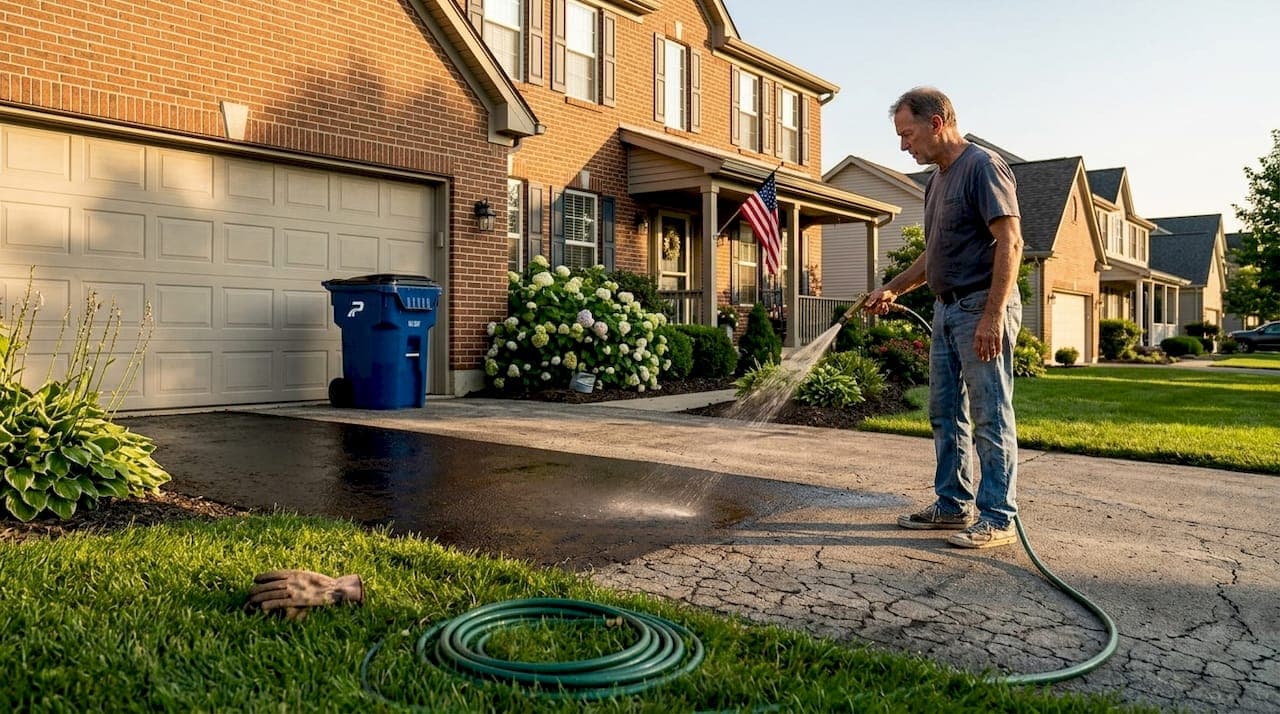
Your front lawn looks sharp, the flower beds are freshly mulched, and the exterior paint is spotless. But if your driveway is gray, cracked, and stained with oil, none of that effort lands the way you intended. The driveway is the first surface a visitor, buyer, or appraiser actually walks or drives across — and its condition sends an immediate signal about how you maintain your home. In Tennessee's higher-end suburbs, where property values are closely tied to presentation, a neglected driveway can quietly undo thousands of dollars of other improvements.
Table of Contents
- Why curb appeal matters — and the overlooked role of the driveway
- What is driveway sealing? Process, materials, and expert recommendations
- How driveway sealing enhances curb appeal and property value
- Top mistakes and best practices for driveway sealing
- Our perspective: What most homeowners miss about driveway sealing
- Let us help you transform your curb appeal
- Frequently asked questions
Key Takeaways
| Point | Details |
|---|---|
| Driveway impacts curb appeal | A well-maintained driveway significantly boosts a home's first impression and market value. |
| Proper sealing prevents damage | Routine sealing blocks water and UV rays, minimizing cracks and surface wear. |
| Timing and methods matter | Ideal application uses quality materials on a clean, repaired surface in good weather. |
| Avoid over-sealing | Too much sealing can damage asphalt, so stick with recommended schedules. |
| Professional help delivers best results | Experts ensure better application, durability, and visual appeal, especially for high-value homes. |
Why curb appeal matters — and the overlooked role of the driveway
Tennessee's upscale neighborhoods — from Brentwood and Franklin to Germantown and Farragut — are packed with homeowners who invest heavily in their properties. Irrigation systems, professional landscaping, custom lighting, fresh trim paint. The list is long and the spending is real. Yet the same homeowners often walk past a visibly deteriorating driveway without registering it as a problem.
Curb appeal isn't just a real estate buzzword. It's the instant judgment that forms in the first few seconds someone sees your home from the street. Research consistently shows that buyers make emotional decisions about properties before they ever step through the front door. The driveway is a massive part of that snap judgment because it takes up a significant portion of your front elevation. It's essentially the welcome mat for a property that costs hundreds of thousands of dollars.
A dull, stained, or cracked driveway communicates the wrong message. Even subconsciously, visitors and buyers interpret it as deferred maintenance. That perception spreads beyond the driveway itself — they start wondering what else has been neglected.
Here's what a poorly maintained driveway actually signals to buyers and appraisers:
- Visible cracks suggest foundational movement or long-term water damage
- Oil and rust stains imply poor upkeep and lower pride of ownership
- Faded, washed-out color makes even a newly painted home look tired and older
- Uneven or crumbling edges create a safety concern and suggest structural issues
- Weeds growing through seams reinforce neglect throughout the property
As noted in a driveway care overview, a neglected driveway can be a dealbreaker even in otherwise upscale neighborhoods. That's a striking statement in neighborhoods where every other upgrade is done right. The benefits of sealcoating in Tennessee go far beyond aesthetics — they touch on structural longevity, property value, and the kind of polished look that sets luxury properties apart.
Now that we recognize driveways as vital to curb appeal, let's uncover what driveway sealing actually involves.
What is driveway sealing? Process, materials, and expert recommendations
Driveway sealing is the process of applying a protective coat of liquid sealant over an existing asphalt surface. It is not repaving. It doesn't rebuild your base or add structural depth. What it does is protect what's already there from the elements, chemicals, and daily wear — while simultaneously restoring a rich, dark, uniform appearance.
Think of it like applying a quality finish to hardwood floors. The wood structure stays the same, but the surface is protected, refreshed, and dramatically more attractive.
The sealing process done correctly follows these steps:
- Power wash the entire surface to remove dirt, debris, algae, and loose particles
- Degrease and treat stains, especially oil spots that can prevent proper adhesion
- Fill visible cracks with a flexible crack filler designed for asphalt surfaces
- Allow everything to dry fully before any sealer is applied
- Apply the first coat of sealer using a squeegee or spray system for even coverage
- Allow curing time before applying the second coat — typically several hours
- Block the driveway for 24 to 48 hours to allow the sealer to fully cure
Ideal conditions for sealing include a clean surface, filled cracks, temperatures between 60 and 90 degrees Fahrenheit, squeegee application, and a full cure window of 24 to 48 hours. In Tennessee, that puts the sweet spot squarely in late spring and early fall, when humidity is manageable and temperatures are stable.
Here's a quick comparison of the main sealant types:
| Sealant type | Best use case | Expected lifespan | Key advantage |
|---|---|---|---|
| Coal tar emulsion | High-traffic residential driveways | 3 to 5 years | Excellent fuel and chemical resistance |
| Asphalt-based sealer | Standard residential driveways | 2 to 4 years | Cost-effective, widely available |
| Acrylic sealer | Decorative or colored surfaces | 2 to 3 years | UV resistance, color retention |
| Fast-dry sealer | Weather-sensitive application windows | 2 to 3 years | Shorter cure time |
Tennessee's climate adds specific complexity. Summers push temperatures well above the ideal sealing range, and freeze-thaw cycles in winter stress asphalt repeatedly. Water seeps into tiny surface pores, freezes, expands, and creates cracks from the inside out. Sealing closes those pores before the cycle begins, which is why sealing prevents costly cracks over time and remains one of the smartest preventive maintenance steps you can take.
Pro Tip: Always use a squeegee rather than a brush for application. Squeegees push the sealer into surface voids more effectively and deliver a more uniform finish. Two thin coats consistently outperform one thick coat — the second coat fills any thin spots left by the first.
For a full breakdown of what goes into asphalt services explained, it helps to understand the difference between surface treatments and structural repairs. If you're unsure about your driveway's condition, reviewing Tennessee asphalt terminology can help you ask the right questions before any work begins.
Armed with the basics of how driveway sealing works, let's examine how it directly impacts curb appeal and property value.
How driveway sealing enhances curb appeal and property value
The visual transformation after a fresh seal is immediate and striking. A driveway that looked faded, patchy, and worn suddenly looks intentional, clean, and new. The deep black color contrasts sharply against light-colored concrete borders, green landscaping, and the warm tones of a well-maintained home exterior. It's one of the fastest visual upgrades available per dollar spent.
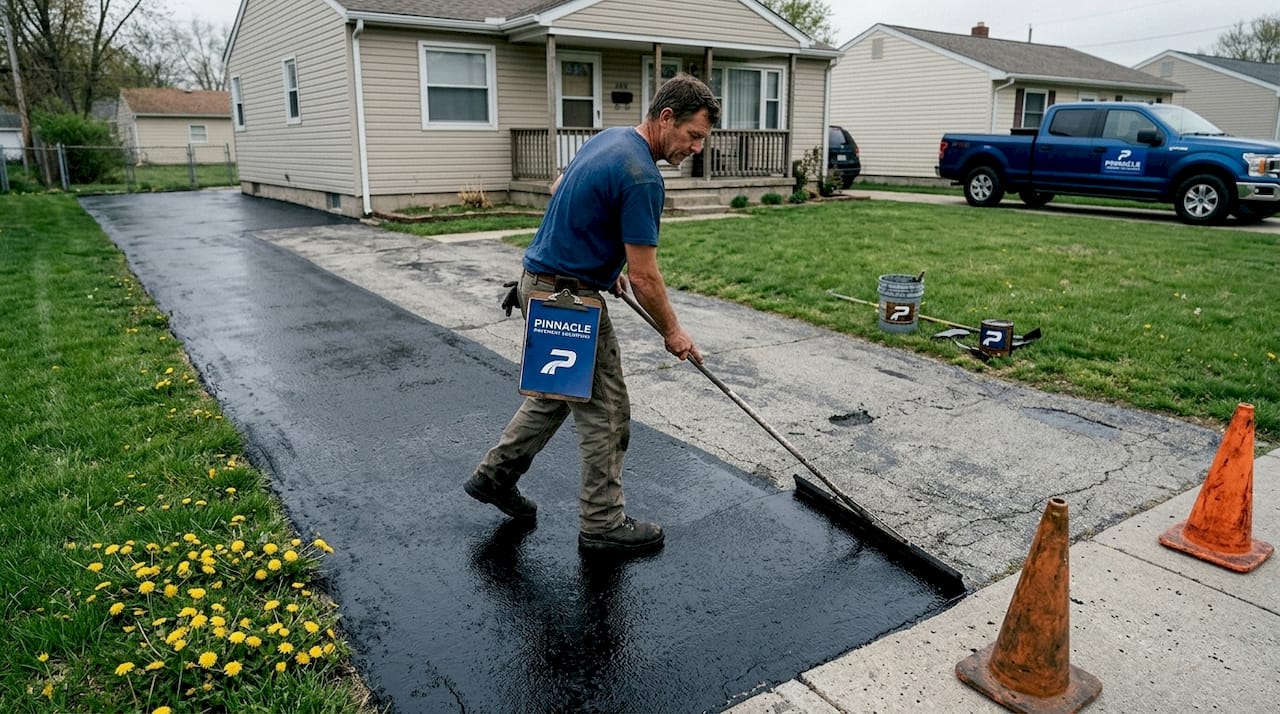
Here's a direct before-and-after comparison:
| Feature | Unsealed driveway | Sealed driveway |
|---|---|---|
| Surface color | Gray, faded, uneven | Deep, uniform black |
| Crack visibility | Clearly visible, growing | Filled and minimized |
| Stain appearance | Oil and rust stains visible | Surface stains blocked |
| Buyer first impression | Concern and hesitation | Confidence and approval |
| Perceived maintenance level | Deferred and neglected | Active and careful |
| Estimated curb appeal impact | Negative to neutral | Positive and memorable |
According to research on pavement maintenance, proper sealing deters cracks and extends pavement life, directly boosting property attractiveness and marketability. For homeowners in Tennessee's luxury markets, this matters because appraisers and buyers have seen enough properties to notice the difference immediately.
What real estate professionals and appraisers consistently report about well-maintained driveways:
- Higher appraisal confidence when all exterior surfaces show consistent upkeep
- Faster buyer decisions because the property reads as move-in ready
- Lower negotiation leverage for buyers trying to chip down the asking price
- Stronger comparative standing against competing listings in the same neighborhood
- Positive ripple effect on buyer perception of interior maintenance as well
The sealcoating benefits also extend to long-term cost savings. A sealed driveway resists UV degradation, water intrusion, and chemical damage — all of which accelerate cracking and surface breakdown. Preventing a $3,000 to $8,000 resurfacing or repaving job with a few hundred dollars of periodic sealing is a straightforward financial win. Natural stone surfaces follow a similar logic, where protective sealing benefits extend longevity and preserve appearance across a wide range of materials.
A freshly sealed driveway is also a subtle but powerful signal of overall home care. Buyers and visitors instinctively understand that a homeowner who maintains their driveway also maintains their roof, HVAC system, and gutters. It's a small detail that does outsized work.
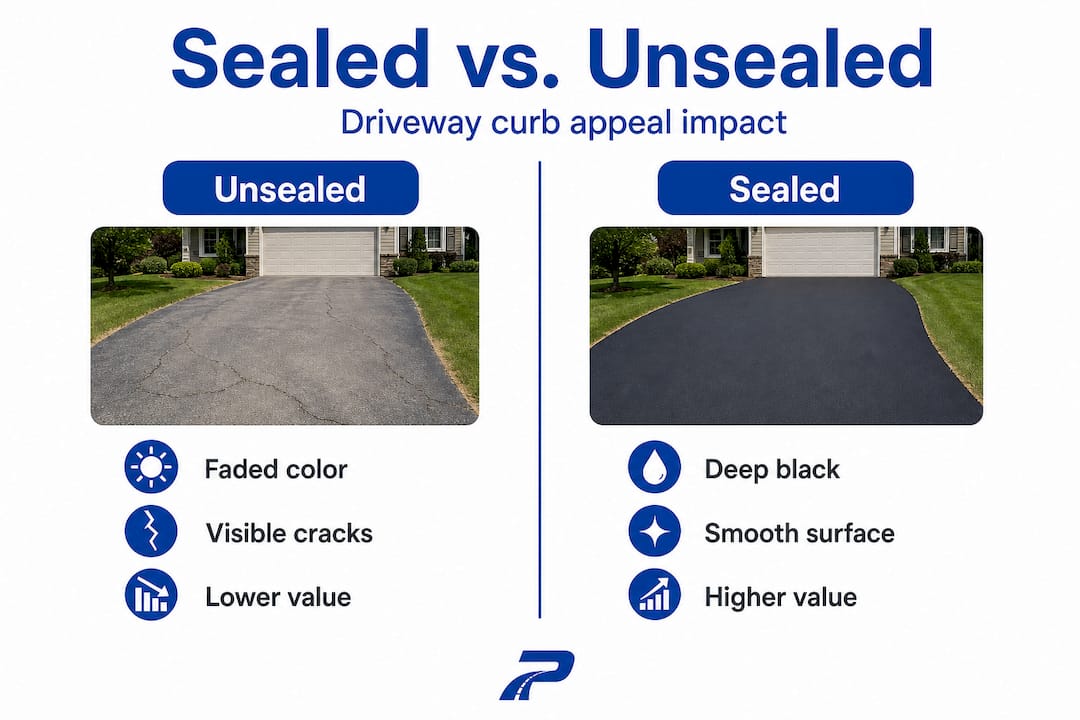
Visualizing the value, many homeowners wonder about pitfalls or overdoing it — let's discuss best practices and common mistakes.
Top mistakes and best practices for driveway sealing
Sealing done wrong can cause more damage than doing nothing at all. These are the mistakes we see most often in Tennessee neighborhoods:
- Sealing over structural cracks or potholes without repairing them first
- Applying sealer too frequently, which builds up and softens the asphalt
- Skipping the cleaning and degreasing step, leading to poor adhesion and peeling
- Sealing in hot midday sun or when rain is forecasted within 24 hours
- Using the wrong product for the surface type or age of the driveway
Too-frequent sealing softens asphalt or causes new cracks to form — the exact opposite of what you're trying to achieve. The goal is protection, not a thicker and thicker coating.
Here's how to avoid the most common pitfalls:
- Inspect the driveway first. Look for cracks wider than a quarter inch, soft spots, or areas where the base has clearly shifted. Those need repair before any sealer goes down.
- Clean thoroughly. Pressure wash, let dry completely, and treat any oil stains with a dedicated degreaser. If the sealer can't bond to the surface, it won't last.
- Choose the right timing. In Tennessee, aim for late April through May or September through October. Avoid sealing during heat advisories or when thunderstorms are expected.
- Follow manufacturer guidelines on recoating intervals. Most quality sealers specify a minimum time between applications — respect it.
- Know when to call a professional. Large driveways, significant cracking, or surfaces that haven't been maintained in years are all situations where professional assessment pays off.
Pro Tip: If you can see daylight through a crack or feel the surface flex under light foot pressure, sealing is not the right next step. You need structural repair first. Sealing over a damaged base is like painting over water-stained drywall — it hides the problem temporarily and makes the eventual repair more expensive.
Understanding when to seal versus when to resurface is critical. The sealcoat vs. resurfacing comparison breaks down exactly how to evaluate which approach your driveway actually needs. For driveways that are past the point of sealing alone, professional sealcoating services include a proper assessment before any product is applied.
Also, the driveway sealing guide is clear that sealing is not appropriate for structurally damaged driveways. Repair always comes first — sealing is maintenance, not rehabilitation.
Our perspective: What most homeowners miss about driveway sealing
Here's the honest truth we've seen play out repeatedly across Tennessee: even visually stunning homes lose the first impression battle because of one neglected driveway. Homeowners spend $20,000 on a kitchen remodel that buyers never see from the street, and then skip a $300 driveway seal that every single person notices the moment they pull up.
We think this happens because driveway sealing doesn't feel exciting. It's not a renovation. There's no dramatic before-and-after reveal in the way a new deck or exterior paint delivers. But the absence of a good driveway is felt immediately — it reads as a warning sign, not just a cosmetic flaw.
In Tennessee's competitive luxury real estate market, the last 20 percent of detail is what separates a property that sells quickly at asking price from one that sits and collects days on market. Buyers in Brentwood or Germantown are comparing multiple high-quality homes. The property that feels complete, polished, and maintained wins. A fresh seal is part of that equation.
We also want to be direct about something: not all sealcoating is the same. Cheap products applied without proper prep work peel, fade unevenly, and leave your driveway looking worse than before. Quality application matters as much as the product itself. The real curb appeal transformations we've been part of consistently involve proper surface prep, the right product for Tennessee's climate, and two-coat application. Those details are what produce results that last.
The homeowners who understand this treat their driveway the same way they treat their roof — as infrastructure that protects an investment and signals serious ownership.
Let us help you transform your curb appeal
Your driveway is one of the most visible parts of your property, and keeping it sealed, clean, and properly maintained is a straightforward investment with real returns in appearance and long-term value.
At Pinnacle Pavement Solutions, we work with Tennessee homeowners who care about the details. Our sealcoating services are built around proper surface preparation, quality materials, and application methods that deliver a finish you'll notice the first time you pull into your own driveway. Whether your surface needs a fresh seal or requires asphalt repairs and upgrades before sealing can begin, our team will give you an honest assessment and a clear plan. Contact us for a free estimate and find out exactly what your driveway needs to make the impression your home deserves.
Frequently asked questions
How often should I seal my driveway in Tennessee's climate?
Most driveways in Tennessee should be sealed every 2 to 3 years, since too-frequent sealing softens the asphalt and can cause new cracks to form. Sealing more often than necessary does more harm than good.
Can I seal a driveway myself, or do I need a professional?
DIY sealing works for small, undamaged driveways where you can follow proper prep steps carefully, but a professional delivers better durability, more even coverage, and the right product match for your surface. For larger driveways or anything with visible damage, professional application is the smarter call.
Does driveway sealing repair cracks and potholes?
Sealing protects against future damage, but existing cracks and potholes must be repaired before sealing for the treatment to hold and perform correctly. Sealing over damage traps the problem and shortens the life of the sealer.
What happens if I seal my driveway too often?
Over-sealing causes sealer to build up in layers, which softens the asphalt and leads to cracking, peeling, or a surface that scuffs and marks easily. Stick to the recommended 2 to 3-year schedule for best results.