
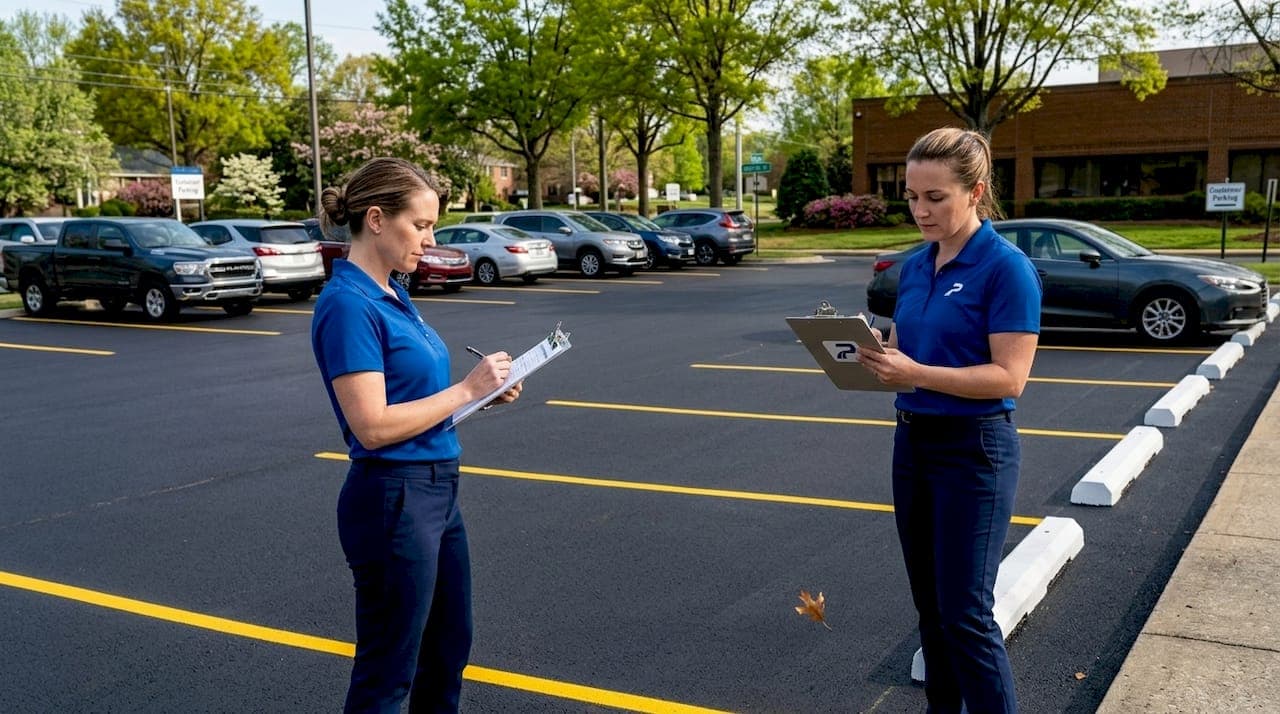
Faded, barely visible parking lines are easy to dismiss as a cosmetic issue. They are not. The moment your lot markings fade below legibility, you introduce real confusion for drivers, real risk for pedestrians, and real liability for your property. Understanding why clear parking lines matter goes far beyond appearances. It connects directly to safety outcomes, legal compliance, space efficiency, and the first impression every visitor forms before they even walk through your door. This guide covers all of it, with practical guidance on how to stay ahead of the problem.
Table of Contents
- Key takeaways
- Why clear parking lines are the foundation of lot safety
- Organizational and aesthetic benefits of marked parking areas
- Compliance requirements you cannot ignore
- Best practices for repainting timing and materials
- Common striping mistakes that cost property owners
- My take on parking lot striping as asset management
- Keep your lot safe and professional with Pinnaclepave
- FAQ
Key takeaways
| Point | Details |
|---|---|
| Safety depends on visibility | Faded lines cause confusion that leads to improper parking, collisions, and unsafe pedestrian crossings. |
| ADA compliance is non-negotiable | Accessible stall markings must be correctly sized and clearly visible or you risk fines and complaints. |
| Spring is the best time to repaint | Milder temperatures improve paint adhesion and curing, extending the life of your markings significantly. |
| Restriping is a layout opportunity | Repaint projects let you reevaluate stall dimensions and traffic flow to gain usable spaces without expanding your lot. |
| Neglect costs more than maintenance | Unmarked lots deter customers, complicate enforcement, and increase your exposure to accidents and legal disputes. |
Why clear parking lines are the foundation of lot safety
Most parking lot accidents are not dramatic. They are low-speed collisions in tight spaces, confused drivers cutting across lanes, pedestrians stepping out between cars with no marked crosswalk in sight. Clear striping prevents all three categories of incident by giving every person in your lot an unambiguous set of rules to follow.
Think about what well-marked stall lines actually do. They physically guide drivers into straight, correctly spaced spaces, which reduces door dings, mirrors clipped on turns, and fender benders during pullout. When stall boundaries are crisp and visible, drivers park with confidence. When they are faded, drivers guess, angle inconsistently, and take up more room than intended. One misparked vehicle triggers a cascade of misaligned neighbors.
Directional arrows and stop bars carry equal weight. Clear traffic markings reduce hesitation and wrong-way movement, which lowers collision risk significantly in high-volume commercial lots. A driver entering a lot with no clear directional flow is essentially improvising, and improvisation in a space shared with pedestrians and other vehicles is a recipe for incidents.
Pedestrians are the most vulnerable group in any parking lot, and marked crosswalks and stop bars increase pedestrian confidence while creating a clear physical separation between foot traffic and vehicle lanes. Without those markings, pedestrians weave between parked cars and active drive aisles without a defined safe path.
- Crisp stall lines prevent crooked parking that blocks traffic flow and wastes space
- Stop bars at lane intersections give drivers a clear yield point before crossing pedestrian paths
- Directional arrows remove ambiguity in one-way lanes and exit routes
- Crosswalk markings create visible, enforceable pedestrian priority zones
- Fire lane markings keep emergency vehicle access routes clear and identifiable
Pro Tip: If your lot serves a high-volume retail or restaurant tenant, prioritize repainting crosswalks and fire lane markings first. Those two elements carry the highest safety and liability weight and degrade fastest under heavy traffic.
Organizational and aesthetic benefits of marked parking areas
A well-striped parking lot is a managed parking lot. The difference between a lot where cars park efficiently and one where they scatter haphazardly comes down almost entirely to how clearly the stall boundaries and traffic lanes are marked.
Clear stall lines tell drivers exactly where to position their vehicles, which means your lot fills predictably and completely. Without them, drivers leave excess space between vehicles and park at angles that block adjacent stalls. You can lose a meaningful number of usable spaces in a mid-size lot just from poor parking behavior caused by faded lines. Reevaluating stall layouts during a repaint project regularly reveals additional usable parking without any physical expansion of the lot.
"Fresh markings signal quality management and improve curb appeal for commercial and multi-family properties." This is exactly what tenants, customers, and residents register before they assess anything else about your property.
Beyond pure space utilization, there is the matter of first impressions. Professional striping signals that the property is actively managed and maintained, which matters whether you are running a strip mall, an apartment complex, or a warehouse facility. Visitors make judgments about an entire property based on what the parking lot looks like before they ever step inside.
- Clearly marked stalls maximize the number of usable spaces in your existing footprint
- Defined traffic lanes reduce congestion during peak hours and improve exit flow
- Well-maintained markings reduce parking disputes between tenants or customers
- Visitor perception of neglected lots directly affects business performance and retention
- Consistent striping creates a professional appearance that reflects positively on property management quality
For multi-tenant properties in particular, the benefits of marked parking areas extend to tenant satisfaction. Tenants who cannot reliably find parking or who deal with constant lot disputes are tenants who eventually look elsewhere.
Compliance requirements you cannot ignore
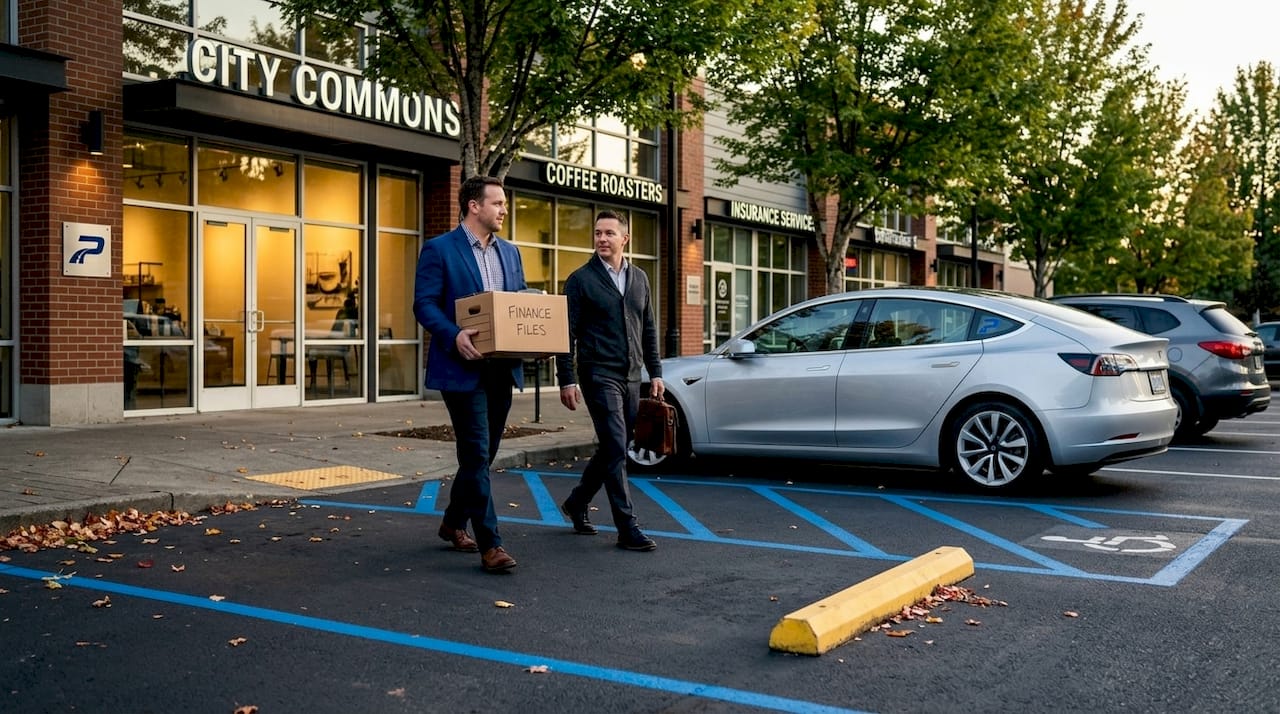
The importance of clear parking lines is not only a matter of best practice. In several categories, it is the law.
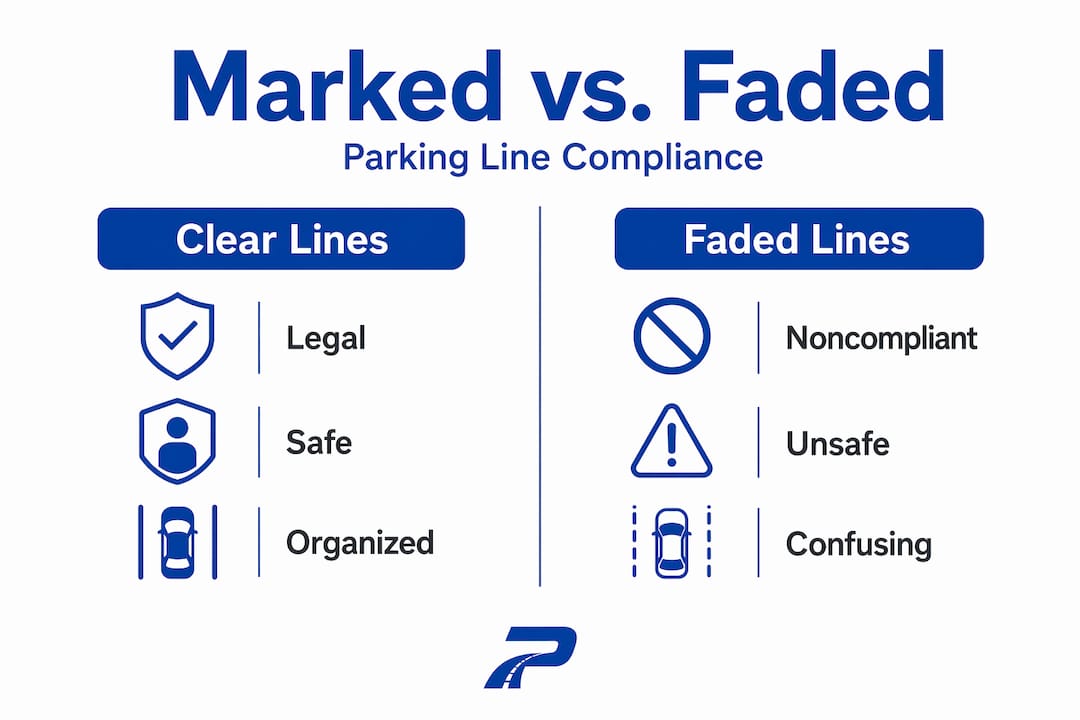
The Americans with Disabilities Act sets specific requirements for accessible parking spaces, and those requirements include visibility. ADA-compliant markings must be correctly sized, clearly painted, and include visible access aisles and routes. When those markings fade, you are not just dealing with an aesthetic problem. You are out of compliance, and faded ADA markings expose you to complaints, fines, and legal action. The Tennessee ADA compliance guide covers the specific stall count ratios and signage requirements relevant to properties in this region.
Beyond ADA, fire lanes, loading zones, and no-parking areas all require distinct, visible markings to remain legally enforceable. This is a point that gets overlooked until enforcement becomes an issue. Faded curb markings complicate enforcement and may endanger emergency vehicle access, which creates liability that extends well beyond a parking ticket.
Here is what compliance-focused restriping should address, in order of priority:
- ADA accessible stalls, including correct dimensions, access aisles, and the international symbol of accessibility
- Fire lane markings, including curb painting and any required lettering
- No-parking zones adjacent to hydrants, building entrances, and drive-thru lanes
- Loading zone designations with time limits where applicable
- Stop bars and crosswalk markings at all pedestrian crossing points
Faded lines make enforcement legally unenforceable, meaning you cannot legally tow a vehicle from a fire lane if the fire lane markings are not clearly visible. That is a direct operational and safety consequence of deferred maintenance.
Best practices for repainting timing and materials
Knowing why clear parking lines matter is only half the equation. Knowing when and how to repaint is what turns that knowledge into practice.
Spring is the ideal season for restriping because milder temperatures and lower moisture levels create the best conditions for paint adhesion and curing. Paint applied in freezing temperatures or on wet surfaces will not bond correctly, and you will see premature fading within months rather than years. Summer works too in most cases, but extreme heat can affect curing as well. Winter applications in most of Tennessee are a gamble not worth taking.
| Timing | Conditions | Paint longevity | Notes |
|---|---|---|---|
| Spring | Mild, dry | Excellent | Ideal window for full restriping |
| Summer | Hot, dry | Good | Avoid peak afternoon heat |
| Fall | Cooling, variable | Fair | Acceptable if temperatures stay above 50°F |
| Winter | Cold, wet | Poor | Not recommended for standard traffic paint |
Material selection matters as much as timing. Water-based traffic paint is cost-effective and fast-drying but fades faster in high-traffic lots. Thermoplastic markings, which Pinnaclepave installs using professional-grade application equipment, last significantly longer and hold up under heavy truck and delivery vehicle traffic.
Pro Tip: Schedule your repainting during your lot's lowest-traffic window, whether that is early morning on a weekday or during a seasonal slow period. Freshly painted lines need time to cure before vehicles drive over them. Rushing this step is one of the most common reasons repaints fade prematurely.
The repainting project is also the right moment to consult pavement striping layouts and reassess whether your current stall orientation, drive aisle width, and traffic flow pattern are actually the most efficient configuration for your lot's footprint.
Common striping mistakes that cost property owners
Knowing the benefits of marked parking areas only pays off if the striping work is done correctly. Several recurring mistakes undermine even well-intentioned repainting efforts.
Inaccurate measurement is the most common problem, and skipping thorough measurement leads to inconsistent stall sizing that frustrates drivers and wastes space. Standard stall widths and drive aisle dimensions exist for a reason. Ignoring them produces a layout that technically fills the lot with paint but fails to organize it effectively.
- Painting over debris, oil stains, or moisture without proper surface prep causes early peeling and fading
- Using the wrong paint type for the traffic load results in markings that wear out far faster than expected
- Delaying repainting past the point of visibility accelerates pavement deterioration by allowing water to penetrate through unsealed asphalt surface cracks
- Omitting new ADA stall counts when a lot is reconfigured creates instant compliance violations
- Painting during unsuitable weather conditions, particularly cold or wet days, dramatically reduces paint adhesion and longevity
The cost of getting this wrong is not just cosmetic. Customers avoid poorly maintained lots and associate them with the business or property they serve. For retail and restaurant properties, that perception directly affects foot traffic and revenue. For apartment and office properties, it affects tenant retention. The impact of visible parking lines on occupancy and customer behavior is more direct than most property managers realize.
Deferred repainting also leads to a cycle where the next repaint requires more surface prep, possibly crack sealing or patching, before new lines can be applied correctly. Staying on a regular maintenance schedule, roughly every one to two years for high-traffic lots, breaks that cycle and keeps costs predictable. Pairing striping with parking lot maintenance practices extends the life of your entire pavement surface, not just the markings.
My take on parking lot striping as asset management
I have worked on enough commercial and multi-family properties to say this clearly: the way a property manager treats their parking lot is one of the most reliable indicators of how they manage everything else.
Clear parking lines are not just paint. They represent a decision to manage proactively rather than reactively. Every property I have seen that deferred striping long enough to have genuinely faded markings had other deferred maintenance issues as well. The parking lot is visible to every person who visits your property. It sets expectations before any interior experience begins.
The insight that most property owners miss is that restriping is not a repair. It is a strategic maintenance decision that touches safety outcomes, legal exposure, space efficiency, and brand perception simultaneously. Parking lot striping improves safety, maximizes asset utilization, and enhances user experience in one single project, and few maintenance line items deliver that breadth of return.
My practical advice: build restriping into your annual maintenance calendar rather than waiting until someone complains. Plan it for spring, pair it with a sealcoat inspection, and treat it as the asset management decision it actually is.
— Dillan
Keep your lot safe and professional with Pinnaclepave
Your parking lot is the first thing tenants, customers, and visitors encounter. At Pinnaclepave, we make sure it makes the right impression from the moment they pull in.
Pinnacle Pavement Solutions provides professional parking lot striping services across Tennessee, handling everything from standard stall repainting and ADA-compliant accessible markings to thermoplastic stop bars, crosswalks, fire lanes, and drive-thru layouts. We use professional-grade equipment, high-durability materials, and precise measurements to deliver markings that last. We also pair striping with sealcoating services to protect your pavement surface and extend the life of your markings. If you are planning a spring restripe or working through an ADA compliance review, contact Pinnaclepave to schedule a site assessment and get an honest, detailed quote.
FAQ
Why are parking lines necessary for commercial properties?
Parking lines define stall boundaries, direct traffic flow, mark pedestrian crossings, and identify legally required zones like fire lanes and ADA accessible spaces. Without them, lots become disorganized and create real safety and compliance risks.
How often should parking lot lines be repainted?
Most commercial lots need restriping every one to two years, depending on traffic volume and weather exposure. High-traffic retail or drive-thru lots may need repainting annually to maintain visibility and compliance.
What happens if ADA parking markings fade?
Faded ADA markings put your property out of compliance with federal accessibility requirements, exposing you to complaints, fines, and potential legal action. Accessible stall lines, access aisles, and symbols must remain clearly visible at all times.
Does the time of year affect parking lot striping quality?
Yes, significantly. Spring applications offer the best results because milder temperatures and lower moisture improve paint adhesion and curing. Winter applications in cold or wet conditions often fail to bond correctly, leading to premature fading.
Can repainting a parking lot actually increase the number of usable spaces?
It can. Restriping projects give property managers the opportunity to reassess stall dimensions and traffic patterns, and many lots gain additional usable spaces simply by optimizing the layout during the repaint rather than replicating the original configuration.