
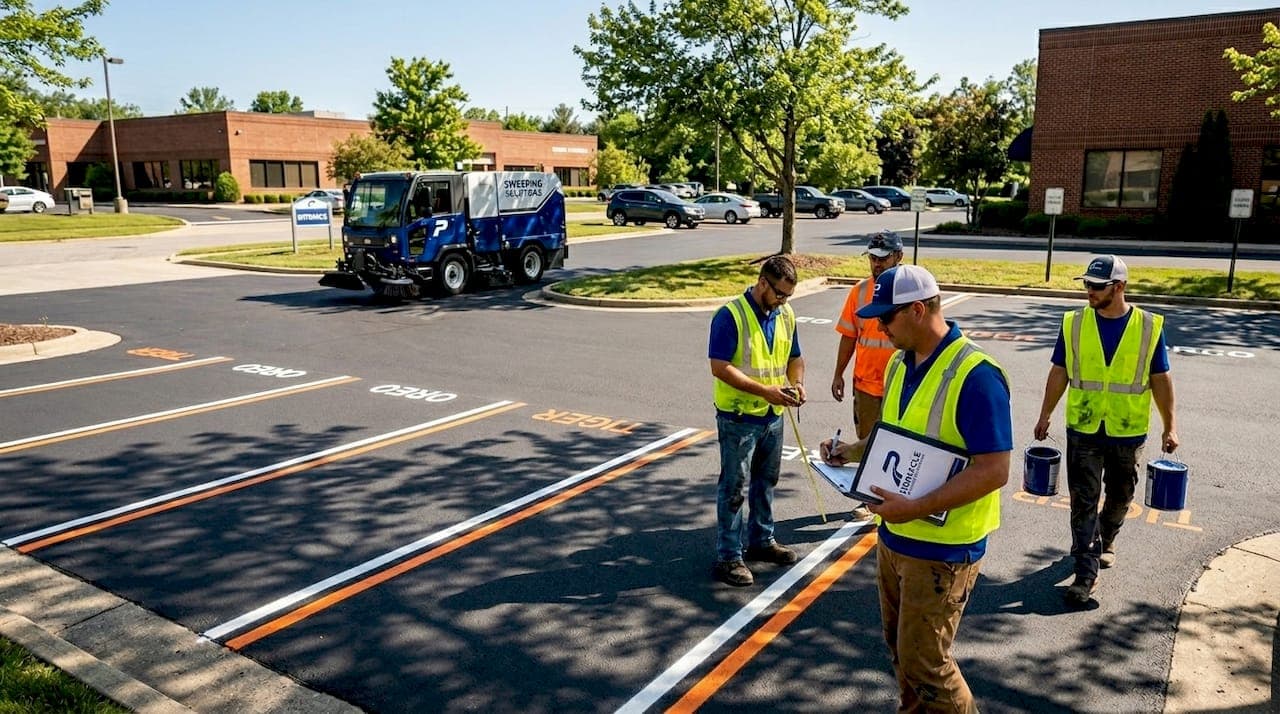
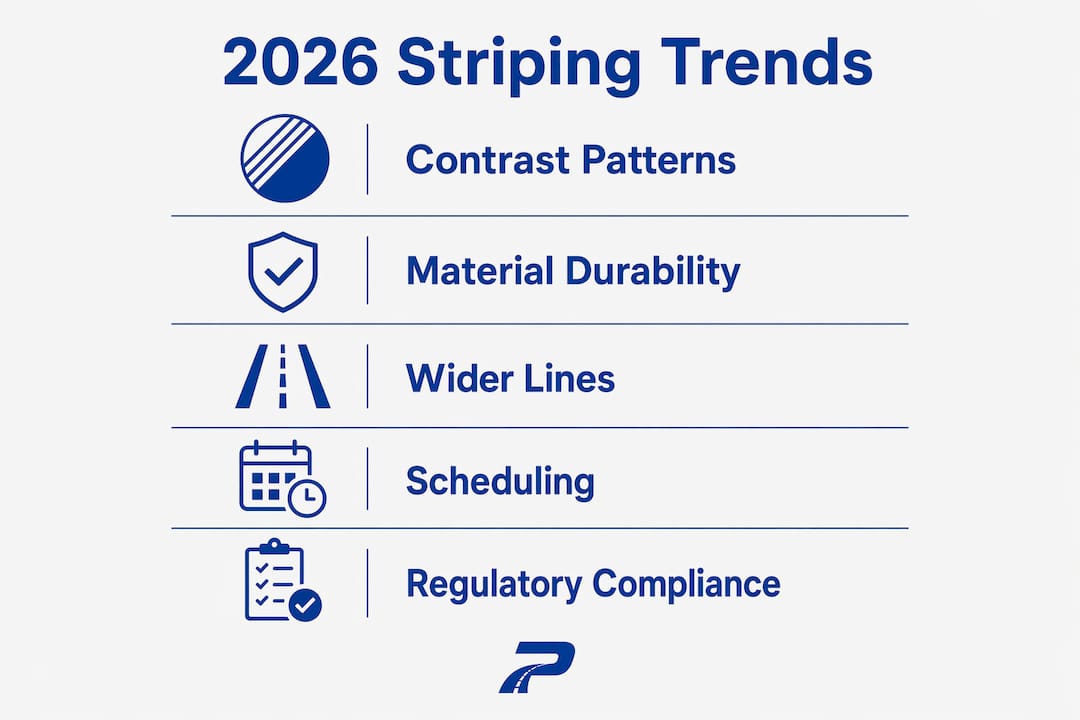
Line striping in 2026 is defined by three priorities: enhanced contrast visibility, material durability, and tighter regulatory compliance. The industry term is "pavement marking," and the line striping trends 2026 brings are reshaping how property owners, facility managers, and contractors plan and budget every project. Caltrans introduced Oreo and Tiger striping patterns on California freeways this year, MnDOT updated its lane marking standards based on driver preference research, and the MUTCD 11th Edition Revision 1 took effect in March 2026. These changes are not theoretical. They affect what you specify, what you pay, and how long your markings last.
What are the latest line striping patterns and contrast techniques in 2026?
The most talked-about 2026 line striping techniques come directly from California's freeway system. Caltrans adopted Oreo and Tiger striping patterns to solve a persistent problem: white paint on light-colored concrete is nearly invisible in glare or wet conditions. Oreo striping places black contrast stripes on either side of a white reflective stripe on north-south corridors. Tiger striping alternates black and white stripes on east-west corridors, and both patterns increase stripe width from 4 to 6 inches. The result is a marking system that reads clearly in full sun, rain, and low-light conditions.
These patterns are not just aesthetic upgrades. Contrast striping innovations aim to reduce visual clutter and confusion, directly improving driver behavior and safety outcomes. The logic applies equally to commercial parking lots and warehouse driveways where concrete surfaces create the same glare problem.
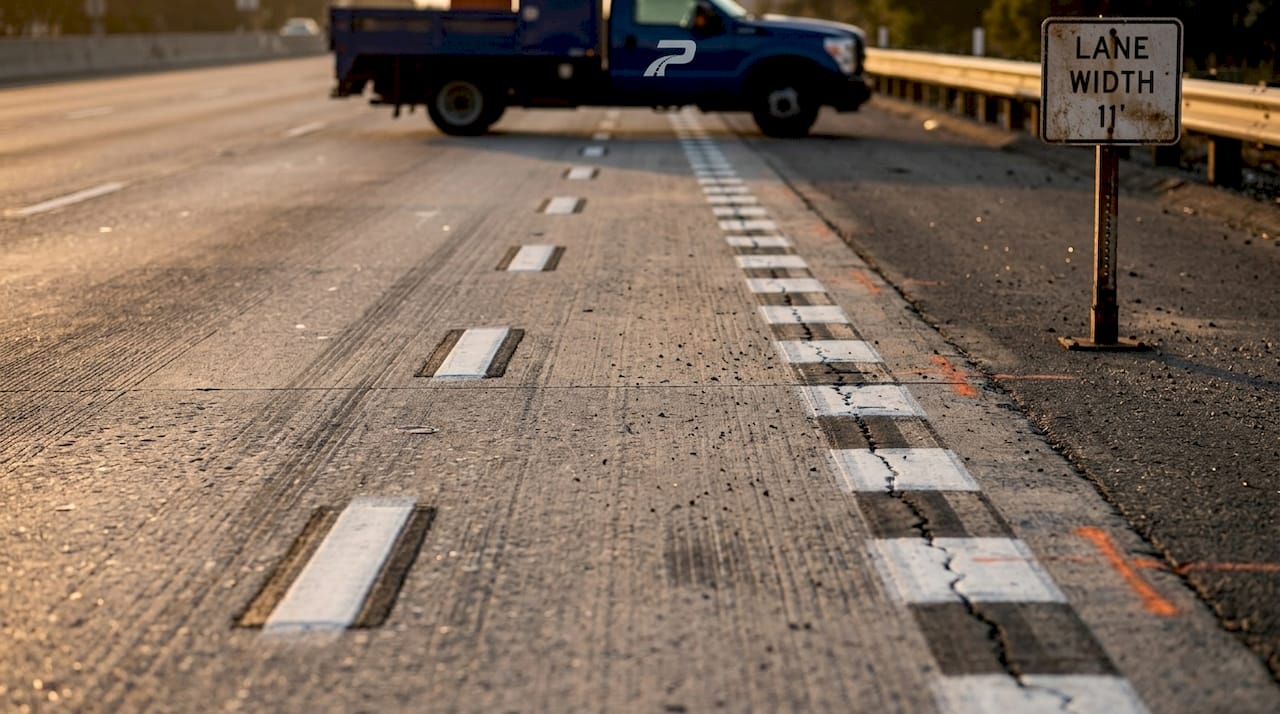
The other major development in current line striping styles is the orange contrast pilot on California's I-5. Caltrans tested orange stripes alongside white in active construction zones, and the pilot showed a 74% reduction in lane departure crashes with a nearly 4 mph speed reduction. That is a significant safety result from a color change alone. Orange is not yet MUTCD-approved for permanent use, so any contractor applying it on public roads needs federal experimental permission first.
Beyond color, MnDOT's 2026 pavement marking updates establish that drivers prefer lane lines that are 6 inches wide and 12.5 feet long with 37.5 feet of spacing for broken lines. Wider and longer segments give drivers more time to process the marking before passing it. This matters for facility managers specifying new parking lot layouts because the same human factors research applies to private lots and drive-through lanes.
Pro Tip: If your property sits on a light-colored concrete surface, ask your contractor about black border contrast lines alongside standard white markings. This is the commercial application of the Oreo concept and costs a fraction of a full repaint.
Key visibility benefits driving these popular line striping designs include:
- Improved retroreflectivity for nighttime and wet-weather conditions
- Wider stripe widths that support vehicle camera and sensor detection in driver-assist systems
- Contrast geometry that reduces glare washout on concrete and light-colored asphalt
- Longer marking segments that give drivers more processing time at highway and lot speeds
How do updated material and paint technologies influence 2026 striping durability and costs?
Material selection is where line striping industry advancements translate directly into budget decisions. Water-based paint costs $20 to $40 per gallon and is the standard choice for most parking lots. Solvent-based paint costs more, dries faster, and holds up better in high-traffic areas. Thermoplastic is the premium option, with a 3 to 5 year lifespan compared to 12 to 24 months for paint. For a facility manager running a high-volume commercial lot, thermoplastic pays for itself by cutting restriping frequency in half.
Comparing material lifespans and costs
| Material | Typical lifespan | Best application |
|---|---|---|
| Water-based paint | 12 to 18 months | Residential lots, low-traffic areas |
| Solvent-based paint | 18 to 24 months | Standard commercial parking lots |
| Thermoplastic | 3 to 5 years | High-traffic lots, roadways, crosswalks |
| Epoxy coatings | 5 to 10 years | Garages, warehouses, indoor surfaces |
Standard parking lot striping costs run $0.20 to $1.00 per linear foot for basic lines. Specialty markings add specific per-item costs: handicap spaces run $25 to $50 each, directional arrows cost $10 to $30, crosswalks run $50 to $100, and custom stencils range from $20 to $200. A 50-space commercial lot with ADA markings, arrows, and crosswalks can easily reach $2,500 to $4,000 for a full repaint. Thermoplastic on the same lot runs higher upfront but reduces the 5-year total cost significantly.
Choosing the right pavement marking types for your surface and traffic volume is the single most important cost decision in any striping project. Applying water-based paint to a busy drive-through lane means restriping every 12 months. Applying thermoplastic to a low-traffic residential lot is overkill. Match the material to the use case.
Pro Tip: Request a lifecycle cost comparison from your contractor before approving materials. Divide the total material and labor cost by the expected lifespan in months. Thermoplastic often costs less per month than paint when you factor in labor for reapplication.
Factors that affect final pricing beyond material choice include:
- Surface condition and whether crack repair or sealcoating is needed first
- Number of specialty markings such as ADA spaces, fire lanes, and stencils
- Lot size and total linear footage
- Regional labor rates and equipment mobilization costs
What are best practices for scheduling and maintaining striping to maximize lifespan in 2026?
Scheduling is where most property owners lose money on striping. Restriping every 18 to 24 months is the standard recommendation to maintain visibility and compliance, but the timing within that cycle matters as much as the interval. Paint applied over a freshly sealed surface bonds poorly and fades faster. Sealcoating applied over fresh paint covers the markings entirely, forcing an immediate restripe. These two mistakes together can cost a property owner a full restripe within 90 days of the original work.
The correct sequence for a combined sealcoating and striping project is:
- Complete all asphalt repairs and crack filling first
- Apply sealcoating and allow full cure time, typically 24 to 48 hours depending on temperature and humidity
- Apply line striping only after the sealcoat has fully cured
- Schedule the combined project in spring or early fall to avoid summer heat that accelerates paint cure and reduces adhesion quality
Spring and early fall are the best windows for striping in Tennessee and most of the Southeast. Temperatures between 50°F and 90°F produce the most consistent paint adhesion. Freeze and thaw cycles in winter cause pavement expansion and contraction that breaks paint bonds, so any striping done in late fall risks early failure. Aligning your maintenance schedule with these seasonal windows reduces rework and extends the visible life of every marking.
Pro Tip: Add a striping inspection to your annual property walkthrough every spring. Faded lines, missing ADA symbols, and worn directional arrows are compliance liabilities. Catching them early costs far less than addressing them after a complaint or citation.
Misaligned scheduling between sealcoating and striping is one of the most common and expensive mistakes in pavement maintenance. Coordinate both scopes with a single contractor who manages the sequencing, or get written confirmation from separate contractors that their work order is correct before either project begins.
How do 2026 regulatory updates and standards affect line striping compliance?
The MUTCD 11th Edition Revision 1 became effective in March 2026 and sets uniform standards for traffic control devices across public roads, bikeways, and private roads open to public travel. For facility managers, the key phrase is "private roads open to public travel." If your parking lot or drive-through is accessible to the public, MUTCD standards apply to your markings, not just to the street in front of your building.
Practical compliance considerations for 2026 include:
- ADA-compliant handicap markings must meet current symbol specifications and dimensions. Outdated symbols are a liability exposure even if the space count is correct. Review the ADA compliance requirements for Tennessee properties specifically.
- Fire lane markings must meet local fire code requirements for color, width, and text. These vary by municipality and are separate from MUTCD.
- Non-standard colors such as orange or custom brand colors on public-access surfaces require agency approval. Using them without authorization creates compliance risk and may require costly revision.
- Experimental pilot projects like the California orange striping require formal federal permission. Property owners on private lots have more flexibility, but any surface accessible to the public carries regulatory exposure.
Tennessee property owners should also review the Tennessee pavement standards that govern marking requirements at the state level. State standards sometimes exceed MUTCD minimums, particularly for commercial properties near state-maintained roads. Working with a contractor who knows both federal and state requirements prevents costly corrections after the fact.
Non-standard pavement marking colors used without regulatory approval can require full project revision. The experimental process exists for a reason: it lets agencies evaluate safety benefits before formal adoption into MUTCD standards. Until orange or other contrast colors receive full MUTCD approval, the safest path for public-access surfaces is to stick with approved white and yellow markings and use contrast geometry like black borders instead of unapproved colors.
Key takeaways
Line striping in 2026 requires matching contrast geometry, durable materials, and compliant scheduling to get markings that last and meet regulatory standards.
| Point | Details |
|---|---|
| Contrast patterns improve safety | Oreo and Tiger striping increase visibility on concrete surfaces for both drivers and vehicle sensors. |
| Material choice drives lifecycle cost | Thermoplastic lasts 3 to 5 years versus 12 to 18 months for water-based paint, reducing total restriping cost. |
| Sequence sealcoating before striping | Applying paint before sealcoat cures wastes the investment and forces early reapplication. |
| MUTCD 2026 applies to private lots | Public-access private roads and parking lots must comply with MUTCD 11th Edition Revision 1 standards. |
| Restripe every 18 to 24 months | Regular intervals maintain visibility, ADA compliance, and liability protection for commercial properties. |
What I've learned about striping projects that most guides skip
I've seen a lot of striping projects go sideways for one reason: the scope was never fully defined before the first stripe hit the pavement. A property manager approves a restripe, the contractor shows up, and nobody confirmed whether the ADA symbols were being replaced, whether the fire lane text was included, or whether the sealcoat had cured long enough. Three weeks later, the paint is peeling and the ADA symbols are still the old design.
The 2026 line striping trends around contrast geometry and material durability are genuinely useful, but they only matter if the project is scoped and sequenced correctly. Oreo striping on a lot that gets sealcoated six weeks later is money wasted. Thermoplastic on a surface with active cracking will fail early regardless of material quality.
My honest advice: treat striping as a system, not a line item. It connects to your sealcoating schedule, your ADA compliance posture, your seasonal maintenance calendar, and your long-term pavement budget. The benefits of regular striping go beyond aesthetics. Clear, compliant markings reduce liability, improve traffic flow, and signal to customers and tenants that the property is well managed.
The contractors who deliver the best results are the ones who ask about your sealcoating timeline before they quote the striping. If a contractor shows up ready to stripe without asking about surface readiness, that is a red flag worth acting on.
— Dillan
How Pinnaclepave can handle your 2026 striping needs
Staying current with 2026 pavement marking standards while managing costs and scheduling takes more than a can of paint and a striping machine.
Pinnaclepave handles the full scope: parking lot striping with ADA-compliant handicap markings, fire lane text, directional arrows, and custom stencils, plus thermoplastic roadway markings for high-traffic commercial and municipal applications. Every project is sequenced correctly with sealcoating and surface prep so your markings last. Pinnaclepave serves commercial property owners, franchise operators, warehouse facilities, and municipalities across Tennessee with honest pricing and drone-documented results. Contact Pinnacle Pavement Solutions to get a quote and a project timeline built around your 2026 maintenance calendar.
FAQ
What are the main line striping trends for 2026?
The leading trends are contrast geometry patterns like Oreo and Tiger striping, wider lane markings based on MnDOT driver preference research, and increased use of thermoplastic for durability. Regulatory compliance with MUTCD 11th Edition Revision 1 is also shaping specification decisions.
How often should a commercial parking lot be restriped?
Most commercial lots need restriping every 18 to 24 months, or sooner if lines fade or get covered during sealcoating. High-traffic lots using water-based paint may need annual restriping.
Is orange striping legal for commercial properties in 2026?
Orange is not yet MUTCD-approved for permanent use on public-access surfaces. It is currently an approved experimental application in California construction zones only. Using it without agency authorization on public-access private roads creates compliance risk.
What is the cost difference between paint and thermoplastic striping?
Water-based paint costs $20 to $40 per gallon and lasts 12 to 18 months. Thermoplastic has a higher upfront cost but lasts 3 to 5 years, making it more cost-effective for high-traffic commercial lots over a 5-year period.
Do MUTCD standards apply to private parking lots?
Yes. The MUTCD 11th Edition Revision 1 applies to private roads and parking lots that are open to public travel. Facility managers should verify their markings meet current standards for ADA symbols, fire lanes, and pavement marking colors.